


1:15
When people search forAshokarishta and Arjunarishta, they are often looking for two very different kinds of Ayurvedic preparations. Although both belong to the traditional fermentedarishta category, their ingredients and traditional applications are not the same.Ashokarishta is traditionally associated with women's health, particularlymenstrual and menopausal concerns, while Arjunarishta is traditionally associated with cardiovascular health because it containsTerminalia arjuna (Arjuna).Understanding their differences, ingredients, traditional uses, and safety considerations can help put online health claims into perspective.What Is Ashokarishta?Ashokarishta is a traditional Ayurvedic fermented herbal preparation in which Ashoka (Saraca asoca) is an important botanical ingredient. The Ministry of Ayush's E-Charak database identifiesSaraca asoca as Ashoka and lists its bark as the medicinal plant part.In Ayurvedic practice, Ashokarishta is traditionally associated with women's reproductive and menstrual health. It is also discussed in relation to symptoms occurring around menopause. Importantly, traditional use should not automatically be interpreted as proof that the preparation treats a particular medical condition.There is some clinical research on Ashokarishta. For example, a small randomized clinical study investigated Ashokarishta alongside Ashwagandha Churna and Praval Pishti in women with menopausal symptoms and reported improvements in symptom scores. However, the study evaluated a combination of preparations, so its findings cannot establish that Ashokarishta alone is responsible for those results.What Are the Benefits And Uses of Ashokarishta?The commonly discussedAshokarishta benefits are mainly associated with women's health. In traditional Ayurvedic practice, it is used in relation to menstrual concerns and symptoms that may occur during the menopausal transition. However, these traditional uses should be distinguished from benefits supported by modern clinical research.Traditional menstrual support: Ashokarishta is traditionally used to support women's menstrual health and related concerns.Menopausal concerns: It is also traditionally associated with managing certain symptoms experienced during the menopausal transition.Traditional Ayurvedic use: The commonly described benefits are based largely on Ayurvedic practice and should not automatically be considered clinically proven treatments.Baidyanath Ashokarishta: This is one of the branded Ashokarishta products available in the market.Dabur Ashokarishta: Another commercially available formulation that people commonly search for online.Dabur Ashokarishta 450 ml: This search generally refers to a particular pack size rather than a separate type of Ashokarishta.Since formulations, ingredients, labeling, and directions may differ between manufacturers, always check thecurrent product label instead of assuming that every Ashokarishta product has exactly the same formulation or uses.What Is Arjunarishta?Arjunarishta, also known as Arjunarishtam in some contexts, is a traditional fermented Ayurvedic preparation associated withTerminalia arjuna, commonly called Arjuna. The Ministry of Ayush's medicinal-plant database listsTerminalia arjuna as a recognized medicinal plant.Arjunarishta has traditionally been associated with cardiovascular health. Scientific literature describes Arjunarishta as a fermented preparation containingTerminalia arjuna, although researchers also point out that differences between marketed formulations can affect quality and consistency.This distinction matters because evidence concerning the individual herbTerminalia arjuna should not automatically be treated as evidence that every Arjunarishta formulation has the same effects.What Are the Benefits And Uses of Arjunarishta ?The commonly searchedArjunarishta benefits are primarily related to traditional cardiovascular support. Arjuna has been studied for several cardiovascular applications, but research on the individual plant, extracts, and traditional formulations varies in design and quality.A study found thatTerminalia arjuna used alongside telmisartan reduced blood pressure more than placebo after 28 days. However, the study tested capsules, notArjunarishta, so it does not prove that Arjunarishta can replace hypertension treatment.Searches such as“Patanjali Arjunarishta for blood pressure,” “Baidyanath Arjunarishta,” and“Baidyanath Arjunarishta syrup” are product-specific. Always check the current product label and consult a healthcare professional before using such products with prescribed medicines.What Is the Difference Between Ashokarishta and Arjunarishta?Although both are traditionally fermented Ayurvedic preparations,Ashokarishta and Arjunarishta differ in their main ingredients and traditional uses.Main ingredient: Ashokarishta is associated withSaraca asoca (Ashoka), while Arjunarishta containsTerminalia arjuna (Arjuna).Traditional focus: Ashokarishta is traditionally associated with women's reproductive and menstrual health, whereas Arjunarishta is traditionally linked with cardiovascular health.Commonly discussed uses: Ashokarishta is often discussed for menstrual and menopausal concerns, while Arjunarishta is commonly discussed in relation to traditional cardiovascular support.Research: Clinical evidence for both preparations is limited, and research onTerminalia arjuna should not automatically be considered evidence for every Arjunarishta product.Medical treatment: Neither preparation should be considered a substitute for prescribed treatment.Safety: Persistent menstrual problems, high blood pressure, or heart-related symptoms should be medically evaluated rather than self-treated with these preparations.Because their ingredients and traditional applications differ,Ashokarishta and Arjunarishta should not be considered interchangeable.Can Ashokarishta and Arjunarishta Be Taken Together?Whether two herbal preparations can be combined depends on the individual's health status, medicines, allergies, and the exact formulations involved. Taking multiple herbal products together can also make it harder to identify which product is responsible if an unwanted reaction occurs.People taking medicines forblood pressure, heart conditions, diabetes, or blood clotting should be especially cautious. Herbal products may interact with medicines, and concerns about formulation differences, contamination, and limited safety data remain.For these reasons, combining Ashokarishta and Arjunarishta should be discussed with a qualified healthcare professional rather than based solely on internet recommendations.What Are the Side Effects and Precautions of Ashokarishta and Arjunarishta?Both products are fermented Ayurvedic preparations, so their safety can depend on the formulation, ingredients, and the person using them. Before using either one, keep these important precautions in mind:Naturally occurring alcohol: Fermentation can produce ethanol, so arishta preparations may contain some alcohol.Check the product label: Alcohol content, ingredients, and other formulation details can vary between products and manufacturers.Medicine interactions: Talk to a healthcare professional before using them with prescription or long-term medicines.Allergies: Check the ingredient list carefully if you have known allergies or sensitivities to herbal ingredients.Existing health conditions: People with ongoing medical conditions should seek professional advice before starting an Ayurvedic preparation.Pregnancy and breastfeeding: Consult a qualified healthcare professional before using Ashokarishta or Arjunarishta during pregnancy or breastfeeding.Do not replace prescribed treatment: Neither preparation should be used as a substitute for medicines prescribed for conditions such as hypertension or other diagnosed health problems.Do not assume that “natural” means risk-free. Herbal products can contain biologically active compounds, and their effects may vary according to formulation, manufacturing process, and individual health factors.ConclusionUnderstanding the difference betweenAshokarishta and Arjunarishta can help you choose information that is relevant to your health needs. Ashokarishta is traditionally associated with menstrual and women's health, while Arjunarishta is traditionally linked with cardiovascular health andTerminalia arjuna.Although both are widely discussed as Ayurvedic preparations, their traditional uses should not be confused with proven medical treatments. Their ingredients, formulations, and safety considerations can also vary between products. If you are consideringAshokarishta or Arjunarishta, especially while taking prescription medicines or managing a health condition, speak with a qualified healthcare professional first.For more evidence-based information about Ayurvedic medicines, health conditions, benefits, and precautions,followMedwiki and explore our latest health guides.FAQs About Ashokarishta and Arjunarishta1. Are Ashokarishta and Arjunarishta the same?No. They are different traditional Ayurvedic fermented preparations with different principal botanical ingredients and traditionally associated health applications.2. What is Ashokarishta traditionally used for?Ashokarishta is traditionally associated with women's health, including menstrual and menopausal concerns. Clinical evidence remains limited and should not be interpreted as proof of treatment for every related condition.3. What are the traditional benefits of Arjunarishta?Arjunarishta is traditionally associated with cardiovascular health because it containsTerminalia arjuna. Research on Arjuna exists, but evidence for specific Arjunarishta products is more limited.4. Can Arjunarishta cure high blood pressure?It should not be described as a cure for hypertension. Research onTerminalia arjuna has produced promising findings in some settings, but this does not establish that Arjunarishta can replace prescribed blood-pressure treatment.5. Is Ashokarishta suitable for every menstrual problem?No. Menstrual changes can have many causes, including hormonal conditions, pregnancy, thyroid disorders, structural problems, and other health issues. Persistent or unusual symptoms deserve appropriate medical evaluation.6. Are all Ashokarishta and Arjunarishta products identical?Not necessarily. Different manufacturers may use different formulations, manufacturing processes, labeling, and quality-control practices. Product-specific information should therefore be checked carefully.7. Do Arishta preparations contain alcohol?Fermentation naturally produces ethanol in arishta preparations. The amount can vary between formulations and products, so people who need to avoid alcohol should check the specific product information and seek professional advice.8. Can Ayurvedic preparations interact with prescription medicines?Yes, potential herb-drug interactions are an important consideration. Anyone taking long-term medicines should discuss herbal preparations with a qualified healthcare professional before combining them.

1:15
Vaccination remains important beyond childhood because protection against some infections may decrease over time, while new health, occupational, travel, or age-related risks can develop during adulthood. Some adults may need booster doses, while others may need vaccines because of a medical condition, pregnancy, occupation, travel plans, or incomplete vaccination history.Adult vaccines in India can vary from person to person. Theadult vaccination schedule in India may depend on age, previous vaccination, medical conditions, immune status, occupation, pregnancy, travel, and exposure risks.Knowingwhich vaccines are recommended after 18 can help adults discuss their immunization needs with a healthcare professional. There is no single vaccine list that applies identically to every adult.What Is Adult Immunization?Adult immunization refers tovaccination given during adulthood to prevent vaccine-preventable infections and maintain protection acquired earlier in life. It may include completing an incomplete childhood vaccination series, receiving booster doses, or receiving vaccines that become relevant because of age or medical risk.There is no singleAdult Immunization Schedule that applies in exactly the same way to every person after turning 18. Healthcare professionals generally consider previous vaccination, age, medical history, occupation, pregnancy, travel, and other risk factors before recommending vaccines.Keeping a written or digital record of previous vaccinations can make this assessment easier. If vaccination history is incomplete or unknown, a healthcare professional can determine whether additional doses are appropriate.Why Are Vaccines Needed After 18 Years?Protection against some infections can change over time, and adults may encounter new risks as their health, occupation, lifestyle, or travel patterns change.Certain medical conditions can also increase the risk of severe complications from infections. Diabetes, chronic heart or lung conditions, kidney or liver disease, and conditions that affect the immune system may influence which vaccines are considered.Vaccination may also become particularly relevant during pregnancy, before certain medical treatments, after specific exposures, or when travelling to areas where particular infections are more common.Which Vaccines Are Recommended for Adults After 18 in India?Theadult vaccination schedule in India is not a single universal schedule for every person. Recent Indian expert consensus describes vaccination according to groups such as healthy adults, adults with comorbidities, and older adults, with recommendations also influenced by individual risk factors.Commonly consideredadult vaccines in India include tetanus-containing vaccines, influenza, pneumococcal, hepatitis B, hepatitis A, HPV, shingles, MMR, varicella, and selected travel- or exposure-related vaccines.The need for each vaccine, the age at which it is given, the number of doses, and the interval between doses can vary according to the vaccine product and individual circumstances.What Vaccines Do Adults Need and When Should They Get Them?Tetanus Vaccine for AdultsTetanus vaccination for adults helps maintain protection against tetanus, a bacterial infection that can occur when bacteria enter the body through wounds.Adults may need tetanus-containing booster doses according to their previous vaccination history and clinical circumstances. Wound management can also affect whether vaccination or other preventive treatment is needed.During pregnancy, a tetanus- and pertussis-containing vaccine may be recommended according to applicable clinical guidance. The exact recommendation should be confirmed with a healthcare professional.Hepatitis B Vaccine for AdultsTheHepastitis B vaccine helps prevent hepatitis B, a viral infection that can cause acute and chronic liver disease.Vaccination may be particularly relevant for adults with increased exposure risks, including some healthcare and occupational settings. The number and timing of doses depend on the vaccine product and the person's circumstances.What Is the Hepatitis B Vaccine Dose for Adults in mL?Thehepatitis B vaccine dose for adults in mL is not a single universal volume for every product or situation. Common adult formulations may use1 mL per dose, while certain formulations or special situations can require a different volume. The exact product, formulation, dose, and schedule should therefore be checked before vaccination.Pneumococcal Vaccine for AdultsPneumococcal bacteria can cause infections such aspneumonia, meningitis, and bloodstream infections. The risk of severe disease can be higher in older adults and people with certain medical conditions.Pneumococcal vaccination for adults may be recommended based on age and individual risk. The appropriate vaccine and schedule can depend on previous vaccination, underlying conditions, and the vaccine product available.What Is the Pneumococcal Vaccine Schedule for Adults?Thepneumococcal vaccine schedule for adults is not identical for everyone. Depending on age, health conditions, previous vaccination, and the vaccine used, vaccination may involve one vaccine or a sequence of vaccines. A healthcare professional can determine the appropriate schedule for an individual.Influenza Vaccine for AdultsTheinfluenza vaccine for adults helps protect against seasonal influenza. It may be particularly relevant for older adults, pregnant people, healthcare personnel, and people with certain chronic medical conditions.Influenza vaccination is generally given annually because circulating influenza viruses can change and protection may decrease over time.How Often Should Adults Get the Influenza Vaccine?Annual influenza vaccination is commonly recommended for adults. The appropriate vaccine and timing may vary according to current seasonal recommendations and individual circumstances.Shingles Vaccine for AdultsShingles, also called herpes zoster, occurs when the varicella-zoster virus becomes reactivated after remaining in the body following chickenpox infection.The risk of shingles generally increases with age and can also be higher in people with weakened immune systems. The recombinant zoster vaccine may be recommended for eligible adults, with the number and timing of doses depending on age and individual risk.HPV Vaccine for AdultsTheHPV vaccine helps protect against infection with certain types of human papillomavirus that are associated with several cancers and other health conditions.HPV vaccination is most effective when given at the recommended age, but some adolescents and young adults may still be eligible for vaccination. The number of doses depends on the age at which vaccination begins and the applicable recommendations.Hepatitis A Vaccine for AdultsThehepatitis A vaccine for adults may be recommended for people with particular health, occupational, travel, or exposure risks.The number and timing of doses depend on the specific vaccine product and the reason vaccination is being considered.MMR Vaccine for AdultsTheMMR vaccine protects against measles, mumps, and rubella. Adults who do not have adequate evidence of immunity may be advised to receive MMR vaccination depending on their vaccination history, age, occupation, and risk of exposure.The number of doses depends on the individual's circumstances and the applicable recommendation.Varicella Vaccine for AdultsThevaricella vaccine for adults may be recommended for adults who do not have evidence of immunity to chickenpox.Adults without a history or documentation of immunity may require vaccination according to applicable recommendations. Because varicella vaccine is a live vaccine, pregnancy and certain immune-system conditions require specific clinical consideration.Which Other Vaccines May Adults Need?Some adults may require vaccines that are not routinely appropriate for everyone. These can include:Meningococcal vaccines for selected high-risk groups or specific situations.Typhoid vaccination for certain travel or exposure situations.Rabies vaccination for people with particular occupational, travel, or animal-exposure risks.Japanese encephalitis vaccination for selected travellers or people with relevant exposure risks.Hib vaccination for certain adults with specific medical conditions.Other travel-related vaccines depending on the destination and current travel-health recommendations.These vaccines should not be treated as a universal checklist for every adult. The indication depends on the person's medical history, destination, occupation, exposure, and other risk factors.Who May Need Adult Vaccines More Often?Some adults require a more detailed vaccination assessment because their risk of infection or severe disease may be higher.These may include:Older adultsPeople with diabetesPeople with chronic heart or lung conditionsPeople with chronic kidney or liver diseasePeople with weakened immune systemsPeople receiving certain medical treatmentsPregnant people, for vaccines recommended during pregnancyHealthcare personnelPeople with specific occupational exposure risksFrequent or international travellersPeople with particular travel or geographic exposure risksBeing in one of these groups does not automatically mean that every vaccine is required. The appropriate vaccine and schedule depend on the individual's circumstances.When Should Adults Talk to a Doctor About Vaccination?Adults can consider reviewing their vaccination history when they reach adulthood, start a new occupation, plan international travel, become pregnant or plan pregnancy, develop a chronic medical condition, or begin treatment that affects the immune system.A vaccination review is also useful when records are incomplete or when an adult is unsure whether they previously received a particular vaccine.Before vaccination, a healthcare professional can review previous doses, allergies, current medicines, pregnancy status where relevant, medical conditions, immune status, and possible contraindications or precautions.ConclusionVaccination remains relevant throughout adulthood, butadult vaccines in India are not the same for everyone. Recommendations can vary according to age, previous vaccination, health conditions, pregnancy, immune status, occupation, travel, and exposure risks.Instead of following one fixed checklist, adults should keep their vaccination records updated and discuss their individual vaccination needs with a qualified healthcare professional.A personalized vaccination review can help identify incomplete vaccination, appropriate booster doses, and vaccines that may become relevant because of changing age, health, occupation, or travel circumstances.Frequently Asked Questions About Adult Vaccines in India1. Can adults get vaccines if they missed them during childhood?Yes. Adults who missed certain vaccines during childhood may still be able to receive them. A healthcare professional can review their vaccination history and determine whether catch-up vaccination is appropriate.2. Can I take multiple vaccines at the same time?Several vaccines can sometimes be given during the same visit when appropriate. The timing and spacing depend on the specific vaccines and the person's health circumstances.3. Should I repeat a vaccine if I do not remember getting it before?If vaccination records are unavailable, a healthcare professional can review the available history and determine whether additional vaccination is appropriate.4. Are adult vaccines safe for people with chronic health conditions?Many vaccines can be used in people with chronic health conditions, but the appropriate vaccine and timing may depend on the condition, medicines, immune status, and individual risk.5. Can I get vaccinated while taking regular medicines?Many medicines do not prevent vaccination, but some treatments can affect which vaccines are suitable or when they should be given. Tell your healthcare professional about your medicines before vaccination.6. How can I find out which vaccines I need as an adult?A healthcare professional can review your age, vaccination history, medical conditions, occupation, travel plans, pregnancy status where relevant, and other risk factors to identify vaccines that may be appropriate.7. What should I do if I have lost my vaccination records?If your records are unavailable, discuss your previous vaccination history with a healthcare professional. They can help determine whether additional vaccination or other documentation is appropriate.Sources:Centers for Disease Control and Prevention (CDC).Adult Immunization Schedule by Age. Recommendations for adults aged 19 years and older. CDC Adult Immunization Schedule.Indian Academy of Pediatrics / Indian Journal of Community Medicine.Adult Vaccination in India: Recommendations and Guidelines. Available through PubMed Central. Adult Vaccination in India – PubMed Central.

1:15
Urine can sometimes have a stronger smell than usual, especially after waking up or when the body has not received enough fluids. Changes in urine odor may also occur because of certain foods, medications, or changes in the concentration of urine.A strong urine smell does not always mean that something is wrong. Urine may smell different temporarily aftereating particular foods, taking certain medicines, or going several hours without drinking enough water. However, a persistent or unusual odor may sometimes be linked to an underlying health condition.Several factors can causefoul-smelling urine, including dehydration, urinary tract infections, dietary changes, and certain metabolic conditions. Paying attention to other changes, such as dark or cloudy urine, pain during urination, or increased frequency, can help identify when further evaluation may be needed.Why Does My Urine Smell Strong?The smell of urine can vary depending on how concentrated it is and what substances are being removed from the body. When urine becomes more concentrated, its natural odor may become stronger and more noticeable.Astrong-smelling urine may occur temporarily after waking because the urine has been concentrated overnight. Not drinking enough fluids during the day can have a similar effect, particularly when the urine also appears darker than usual.Changes in odor can also be caused by food, medications, or infections. If the smell continues or occurs with other urinary symptoms, it may be useful to speak with a healthcare professional to determine the possible cause.What Are the Common Causes of Strong-Smelling Urine?There are several possiblecauses of strong-smelling urine, and the odor alone usually cannot identify the exact reason. Some causes are temporary and harmless, while others may require medical attention.Dehydrationcan make urine more concentrated and increase its odor.Certain foods can temporarily change the smell of urine.Medications or supplements may affect urine odor in some people.Urinary tract infections can cause changes in urine smell along with other symptoms.Dark or concentrated urine may have a stronger odor than usual.Certain health conditions can sometimes cause unusual changes in urine odor.Other changes in the urine, such as cloudiness, blood, or an unusual color, can provide additional clues. A healthcare professional may consider these changes along with symptoms, medical history, and other findings.Can Dehydration Cause Strong-Smelling Urine?Yes,urine smell and dehydration can be closely connected. When the body does not receive enough fluids, urine becomes more concentrated, which can make its natural odor stronger.Not drinking enough water can increase urine concentration.Heavy sweating can cause fluid loss and more concentrated urine.Vomiting or diarrhoea can reduce the body's fluid levels.Dark yellow urine may occur when urine becomes more concentrated.Strong-smelling urine after waking may result from overnight fluid restriction.Thirst and dry mouth can occur alongside dehydration.Increasing fluid intake may help when dehydration is responsible for the odor. However, persistent strong-smelling urine should not automatically be attributed to dehydration, particularly when other urinary symptoms are present.Can a UTI (Urinary tract infections) Cause Smelly Urine?Yes, aUTIand smelly urine can occur together. A urinary tract infection may change the smell of urine and can also cause symptoms such as burning during urination, increased urinary frequency, or an urgent need to urinate.Strong or unpleasant urine odor may occur with a urinary infection.Burning while urinating is a common urinary symptom.Frequent urination may occur even when only a small amount of urine is passed.An urgent need to urinate can occur during a UTI.Cloudy urine may accompany other urinary changes.Lower abdominal discomfort can occur with some urinary infections.Not everyone with a UTI will have noticeable changes in urine odor. When severalurinary tract infection symptoms occur together, medical evaluation can help determine whether an infection is present and whether treatment is needed.What Does Sweet-Smelling Urine Mean?Sweet-smelling urine may sometimes be associated with changes in how the body processes glucose or other substances. A sweet or fruity odor that persists should not be ignored, particularly when it occurs alongside increased thirst or frequent urination.Persistent sweet urine odor may require medical evaluation.Increased thirst can occur with changes in blood glucose levels.Frequent urination may accompany increased blood glucose.Unexplained tiredness can occur with some metabolic problems.Fruity-smelling breath or urine can sometimes indicate an important metabolic change.Repeated unusual odor should be assessed rather than diagnosed from smell alone.A sweet smell does not by itself confirm a particular condition. Testing may be needed to determine whether changes in blood glucose or another metabolic process are responsible.What Can Cloudy Urine and Strong Smell Mean?Cloudy urine together with a strong odor may occur for several reasons. Sometimes urine can look temporarily cloudy because of its concentration, dietary factors, or other harmless changes, while in other cases it may occur with a urinary infection.Cloudiness can be more significant when it develops alongside burning during urination, frequent urination, pelvic discomfort, or an unusual odor. These symptoms may warrant evaluation for a urinary tract problem.The appearance of urine can also change because of hydration status. If cloudy or strong-smelling urine continues or occurs with pain, fever, blood, or other concerning symptoms, a healthcare professional should assess the cause.What Are the Best Ways to Reduce Strong Urine Odor?The best approach depends on what is causing the odor. When concentrated urine is responsible, improving hydration may help, while persistent symptoms may require evaluation for an underlying condition.Drink adequate fluids throughout the day unless fluid restriction has been advised.Notice dietary triggers that repeatedly change urine odor.Maintain good urinary hygiene to reduce avoidable sources of odor.Pay attention to urine color along with changes in smell.Monitor other urinary symptoms such as burning or increased frequency.Seek medical advice when unusual odor persists or keeps returning.It is not usually necessary to try to eliminate every change in urine odor. Temporary changes may be normal, but persistent or unexplained changes are more useful when considered alongside other symptoms.When Should You Worry About Smelly Urine?A temporary change in urine odor may not be concerning, particularly when it improves after drinking fluids or when a clear dietary cause is present. However, persistentsmelly urine or changes accompanied by other symptoms should be evaluated.Persistent foul-smelling urine should be assessed when the cause is unclear.Burning or pain during urination may indicate a urinary problem.Fever or chills with urinary symptoms can require prompt medical attention.Blood in the urine should not be ignored.Severe back or side pain with urinary symptoms requires medical evaluation.Confusion, severe weakness, or worsening symptoms require prompt medical care.A healthcare professional may ask about fluid intake, diet, medications, urine changes, and other symptoms. Depending on the situation, urine testing or other investigations may be recommended to identify the underlying cause.ConclusionStrong-smelling urine can occur when urine becomes concentrated, particularly because of dehydration or several hours without drinking fluids. Foods, medications, urinary infections, and certain health conditions can also change urine odor.A temporarystrong urine smell may improve with adequate hydration or after a dietary trigger passes. However, persistent odor, especially when accompanied by cloudy urine, burning, frequent urination,blood in the urine, fever, or other urinary symptoms, may require medical evaluation.Paying attention to urine color, odor, and accompanying symptoms can help identify meaningful changes. Anyone with persistent unusual urine odor or concerning urinary symptoms should speak with a healthcare professional rather than relying on urine smell alone.Frequently Asked Questions1. Why does my urine smell strong?Strong-smelling urine can occur when urine is concentrated because of dehydration. Foods, medications, supplements, urinary infections, and certain health conditions may also change urine odor.2. Why does my pee smell bad?Your pee may smell bad because of concentrated urine, certain foods, medications, or a urinary tract infection. Persistent odor with other symptoms should be medically evaluated.3. Can dehydration cause strong-smelling urine?Yes, dehydration can make urine more concentrated and increase its odor. Dark yellow urine and increased thirst may occur at the same time.4. Can a UTI cause smelly urine?Yes, a UTI may cause an unpleasant urine odor along with burning, frequent urination, urgency, cloudy urine, or lower abdominal discomfort.5. What does sweet-smelling urine mean?Sweet-smelling urine can sometimes occur with changes in glucose metabolism. Persistent sweet or fruity odor, especially with increased thirst or frequent urination, should be evaluated.6. Why is my urine cloudy and strong-smelling?Cloudy, strong-smelling urine can occur because of concentrated urine or a urinary infection. Other symptoms such as burning, frequency, pain, or fever can provide additional clues.7. When should I worry about smelly urine?You should seek medical advice if unusual urine odor persists or occurs with burning, blood in the urine, fever, severe pain, or other worsening urinary symptoms.Suggested Reads: https://medwiki.co.in/brand/fluvir-75mg-tablet-10s
1:15
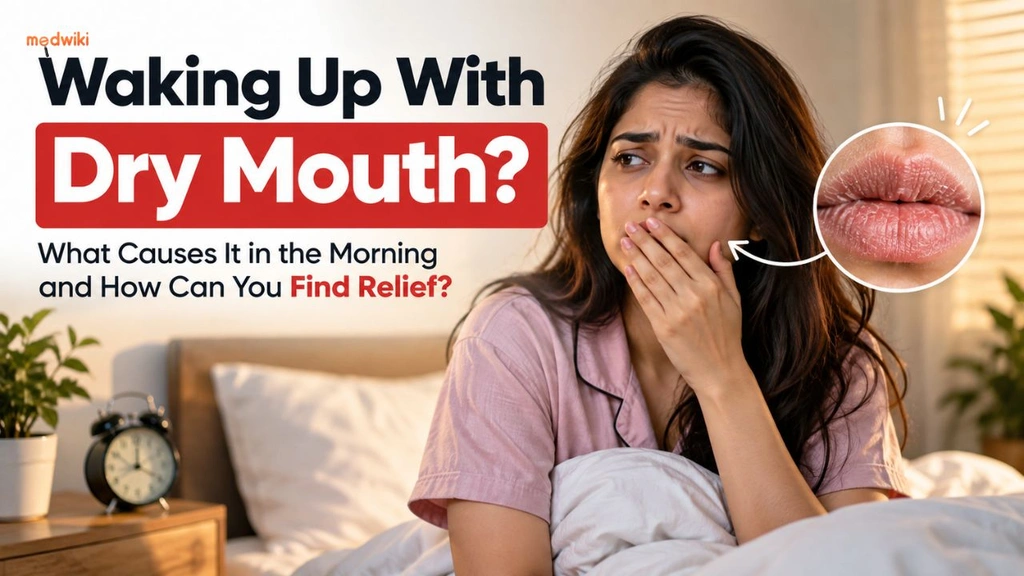
Waking up with a dry mouth can leave the mouth feeling sticky, uncomfortable, or unusually thirsty after a night of sleep. This may happen when saliva production decreases during sleep or when a person breathes through the mouth instead of the nose.Dry mouth in the morning may sometimes occur after sleeping with the mouth open, not drinking enough fluids, or spending several hours in a dry environment. Occasional dryness may not indicate a serious problem, but frequent symptoms can have an underlying cause.Several factors can contribute todry mouth at night, including mouth breathing,dehydration, medications, and conditions that affect saliva production. Understanding the possible causes and accompanying symptoms can help determine when simple changes may help and when medical evaluation is needed.Why Do You Wake Up With Dry Mouth?A dry mouth after sleeping can occur because saliva production naturally decreases during the night. If the mouth remains open while sleeping, moisture can also evaporate more quickly, making the dryness more noticeable after waking.Some people may experiencedry mouth in the morning because ofnasal congestion, sleeping position, or habits that encourage mouth breathing. The sensation may improve after drinking water and becoming more active during the day.Occasional dryness may not be concerning, but persistent symptoms can suggest reduced saliva production or another underlying issue. Frequent dry mouth should be considered along with other symptoms, such as excessive thirst, difficulty swallowing, or changes in oral health.What Are the Common Causes of Dry Mouth?There are several possiblecauses of dry mouth, and more than one factor may contribute to the problem. Dryness can become more noticeable overnight because the mouth naturally produces less saliva while a person sleeps.Mouth breathing can allow moisture to evaporate from the mouth during sleep.Dehydration may reduce the amount of fluid available for saliva production.Certain medications can decrease saliva production or contribute to a dry mouth.Nasal congestion may encourage breathing through the mouth while sleeping.Certain health conditions may affect the salivary glands or the body's ability to produce saliva.Dry mouth by itself cannot usually identify the exact cause. A healthcare professional may consider medications, fluid intake, breathing patterns, oral symptoms, and other health factors when evaluating persistent dryness.Can Mouth Breathing Cause Dry Mouth at Night?Yes,mouth breathing can be an important reason for experiencing dry mouth during sleep. When air repeatedly passes through the mouth instead of the nose, it can increase moisture loss from the tissues inside the mouth.Sleeping with the mouth open can increase overnight moisture loss.Nasal congestion may make nasal breathing more difficult.Allergies can contribute to blocked nasal passages in some people.Snoring may occur alongside mouth breathing during sleep.Dry indoor air can make nighttime mouth dryness more noticeable.Identifying why mouth breathing occurs can be more useful than simply treating the dryness. Nasal congestion, allergies, sleep-related breathing problems, or other factors may need to be addressed if symptoms occur regularly.Is Dry Mouth and Sleep Apnea Connected?Dry mouth and sleep apnea can occur together, particularly when a person breathes through the mouth during sleep. Sleep apnea involves repeated interruptions or reductions in normal breathing during sleep and may be associated with snoring and nighttime mouth breathing.Mouth breathing during sleep can increase dryness inside the mouth.Loud or frequent snoring may occur with some sleep-related breathing disorders.Morning headaches can sometimes accompany sleep disturbances.Daytime sleepiness may occur when nighttime sleep is repeatedly disrupted.Gasping or choking during sleep can be a warning sign that requires evaluation.Dry mouth alone does not mean that a person has sleep apnea. However, persistent dryness together with loud snoring, breathing pauses, or significant daytime sleepiness should be evaluated appropriately.Can Dehydration Cause Dry Mouth in the Morning?Yes,dry mouth and dehydration can be connected. When the body loses more fluid than it replaces, saliva production may decrease, which can make the mouth feel dry or sticky.Not drinking enough fluids can contribute to reduced moisture in the mouth.Heavy sweating can increase fluid loss from the body.Vomiting or diarrhoea can cause significant fluid loss.Fever may increase the body's fluid requirements.Dry mouth with thirst may occur when fluid levels are reduced.Overnight fluid loss can make dryness more noticeable after waking.Drinking enough fluids throughout the day may help when dehydration contributes to dry mouth. However, persistent symptoms should not automatically be attributed to dehydration because other causes may also be involved.What Is Xerostomia and How Is It Related to Dry Mouth?Xerostomia is the medical term commonly used to describe the sensation of having a dry mouth. It may occur when the salivary glands do not produce enough saliva or when changes in saliva make the mouth feel unusually dry.The condition can cause more than simple discomfort. A person may notice difficulty chewing or swallowing dry foods, changes in taste, a sticky feeling in the mouth, or an increased need to drink fluids while eating.Persistent xerostomia may also affect oral health because saliva helps keep the mouth moist and supports normal oral functions. If dryness continues despite adequate fluid intake, a healthcare professional or dentist may help identify the underlying cause.What Are the Best Dry Mouth Remedies?The most appropriatedry mouth remedies depend on what is causing the symptoms. Simple measures may provide relief when dryness is related to mild dehydration or environmental factors, while persistent symptoms may require treatment of an underlying cause.Drink adequate fluids throughout the day unless fluid restriction has been advised.Breathe through the nose when possible to reduce moisture loss from the mouth.Use a humidifier if dry indoor air appears to worsen nighttime symptoms.Avoid excessive caffeine if it appears to make dryness more noticeable.Maintain good oral hygiene to protect the teeth and gums.Discuss persistent symptoms with a healthcare professional or dentist.If a medication appears to be contributing to dry mouth, it should not be stopped or changed without professional advice. Treating the underlying cause may provide more lasting relief than repeatedly managing the dryness itself.When Should You See a Doctor for Dry Mouth?Occasional dry mouth after waking may not indicate a serious problem, especially when it improves after drinking fluids. However, frequent or persistent dryness deserves attention because it may be related to medications, reduced saliva production, sleep-related breathing problems, or another health issue.Persistent dry mouth should be evaluated when it does not improve.Difficulty swallowing or speaking may require medical assessment.Frequent thirst or urination with dryness should not be ignored.Mouth sores or oral discomfort may require evaluation.Snoring or breathing pauses during sleep should be discussed with a healthcare professional.A healthcare professional may review medications, fluid intake, symptoms during sleep, and oral health. A dentist may also assess the teeth, gums, and saliva-related changes when dry mouth continues.ConclusionWaking up with dry mouth can happen because saliva production decreases during sleep, while mouth breathing can increase moisture loss. Dehydration, nasal congestion, medications, and reduced saliva production may also contribute to morning dryness.Occasionaldry mouth in the morning may improve after drinking fluids and addressing simple triggers. However, persistent xerostomia or hyposalivation can affect oral comfort and dental health and may require evaluation to identify the underlying cause.Maintaining adequate hydration, supporting nasal breathing, keeping indoor air comfortable, and practicing good oral hygiene may help in some cases. Anyone experiencing persistent dryness, difficulty swallowing, significant oral symptoms, or possible sleep-related breathing problems should speak with a healthcare professional or dentist.Frequently Asked Questions1. Why do I wake up with a dry mouth?Waking up with a dry mouth can result from reduced saliva production during sleep, mouth breathing, dehydration, medications, or nasal congestion.2. Can dehydration cause dry mouth in the morning?Yes, dehydration can reduce saliva production and make your mouth feel dry or sticky when you wake up.3. Can mouth breathing cause dry mouth at night?Yes, mouth breathing can increase moisture loss during sleep, especially with nasal congestion, allergies, or snoring.4. Is dry mouth a sign of sleep apnea?Dry mouth can occur with sleep apnea due to mouth breathing, but dry mouth alone does not mean you have sleep apnea.5. What is xerostomia?Xerostomia is the medical term for the sensation of having a dry mouth, often caused by reduced saliva production.6. What are some remedies for dry mouth?Drinking enough fluids, supporting nasal breathing, using a humidifier, maintaining oral hygiene, and treating the underlying cause may help.7. When should I see a doctor for dry mouth?See a healthcare professional or dentist if dry mouth persists, affects swallowing or speaking, or occurs with snoring, breathing pauses, or dental problems.

1:15
Getting up quickly from a chair or bed can sometimes cause a sudden sensation of dizziness, lightheadedness, or a brief head rush. This may happen because the body needs to adjust blood pressure and blood flow when moving from sitting or lying down to standing.Ahead rush when standing up can be accompanied by blurred vision,weakness, or a feeling of faintness. Occasional symptoms may occur after prolonged sitting, waking up, dehydration, or standing suddenly, but repeated episodes may have an underlying cause.Several factors can contribute todizziness when standing up, including low blood pressure,dehydration, certain medications, and conditions affecting the heart rate or nervous system. Understanding when the symptoms occur and what other signs accompany them can help identify the possible cause.Why Do You Feel Dizzy After Getting Out of Bed?Dizziness after getting out of bed can occur because the body is changing quickly from a horizontal position to standing. During sleep, a person also goes several hours without drinking fluids, which may contribute to mild dehydration in some situations.Getting up suddenly can make the adjustment in blood pressure more noticeable. Some people may experience a brief head rush, lightheadedness, blurred vision, or weakness that improves after sitting or standing still for a short time.Getting out of bed gradually may help reduce these symptoms. However,dizziness that occurs frequently every morning, lasts longer than expected, or is associated with fainting or other concerning symptoms should be discussed with a healthcare professional.What Are the Common Causes of Dizziness When Standing Up?There are several possiblelightheadedness causes, and more than one factor may contribute to symptoms. Dizziness may be more noticeable after getting out of bed, standing after sitting for a long time, or when the body is low on fluids.Dehydration can reduce blood volume and make it harder to maintain blood pressure.Low blood pressure may cause lightheadedness when changing position.Prolonged sitting or lying down can make standing suddenly more difficult for the body to adjust to.Certain medications can lower blood pressure or affect fluid balance.Blood loss or anemia can contribute to weakness and dizziness.Heart or nervous-system conditions may affect the body's ability to regulate blood pressure.Dizziness by itself cannot usually identify the exact cause. A healthcare professional may consider symptoms, medical history, medications, hydration, blood pressure, heart rate, and other relevant factors.Can Low Blood Pressure Cause a Head Rush When Standing?Yes, low blood pressure can contribute to ahead rush when standing up. When a person stands, gravity causes some blood to temporarily move toward the lower part of the body. The body normally responds by increasing heart activity and narrowing blood vessels to maintain adequate blood flow to the brain.Low blood pressure symptoms may become more noticeable after standing.Blurred vision when standing can occur during a temporary reduction in blood flow.Weakness and dizziness may occur together.Feeling faint when standing can be a warning sign of a significant blood pressure change.Repeated episodes may indicate an underlying problem.Severe symptoms require appropriate medical evaluation.One low blood pressure reading does not necessarily mean that a person has a medical condition. Repeated symptoms should be assessed along with blood pressure measurements and other findings.Can Dehydration Cause Dizziness When Standing?Yes,dizziness and dehydration can be connected. When the body loses more fluid than it replaces, blood volume can decrease. This may make it more difficult for the cardiovascular system to maintain adequate blood pressure when someone stands.Not drinking enough fluids may contribute to dehydration.Heavy sweating can increase fluid loss.Vomiting or diarrhoea can cause substantial fluid loss.Dehydration-related low blood pressure may worsen standing dizziness.Weakness and lightheadedness can occur with dehydration.Severe dehydration may require prompt medical treatment.Replacing fluids may help when mild dehydration is responsible, but persistent dizziness should not automatically be blamed on dehydration. Other causes may need to be considered.Can Medications Cause Dizziness When Standing?Some medicines can contribute tomedications causing low blood pressure and may make dizziness more likely after standing. Medicines that affect blood pressure, heart rate, fluid balance, or the nervous system can sometimes contribute to these symptoms.Blood pressure medicines may lower blood pressure.Diuretics can increase fluid loss.Some heart medicines may affect blood pressure or heart rate.Certain nervous-system medicines may contribute to dizziness.Medication combinations can sometimes increase the likelihood of symptoms.Recent medication changes may provide an important clue.People should not stop or change prescribed medicines on their own because of dizziness. A healthcare professional can review the medication list and determine whether an adjustment is appropriate.What Is Orthostatic Dizziness?Orthostatic dizziness, also called postural dizziness, refers to lightheadedness or other symptoms that occur after standing or changing body position. It can happen when the body'sblood pressure response does not adequately compensate for the change in posture.The symptoms may include dizziness, blurred vision, weakness, or feeling faint. In more significant cases, a person may experiencesyncope, which means a temporary loss of consciousness.Evaluation may include measuring blood pressure and heart rate while lying down and after standing. Depending on the symptoms, a healthcare professional may also consider dehydration, medications, anemia, heart conditions, or problems affecting the nervous system.Could POTS( postural orthostatic tachycardia syndrome) Cause Dizziness When Standing?POTS, or postural orthostatic tachycardia syndrome, is a condition involving an abnormal increase in heart rate when standing. It can cause dizziness, lightheadedness, weakness, fatigue, palpitations, and difficulty tolerating prolonged standing.POTS is different from occasional dizziness that happens after standing quickly. Diagnosis requires medical assessment of symptoms, heart rate, blood pressure, and other possible explanations for the symptoms.People with frequent standing-related symptoms may find it useful to keep track of when episodes occur and how long they last. A healthcare professional can use this information along with appropriate measurements to determine whether POTS or another condition may be involved.How Can You Reduce Dizziness When Standing?The best approach depends on what is causing the symptoms. Occasional mild dizziness may improve with simple changes, while frequent episodes require evaluation rather than relying only on home measures.Stand up slowly after sitting or lying down.Maintain adequate fluid intake unless fluid restriction has been advised.Avoid standing suddenly after prolonged sitting or lying down.Review medications with a healthcare professional if symptoms began after starting or changing treatment.Sit or lie down if you begin feeling faint.Keep track of episodes to identify possible patterns or triggers.Some people may notice symptoms more often after waking, in hot environments, after prolonged standing, or when they have not consumed enough fluids. Identifying these patterns can provide useful information during medical evaluation.When Should You See a Doctor for Dizziness?Occasional brief dizziness may not indicate a serious problem, but recurrent or unexplained symptoms deserve attention. Medical evaluation is especially important when dizziness becomes frequent, severe, or interferes with normal activities.Frequent dizziness when standing should be assessed.Repeated fainting or syncope requires medical evaluation.Chest pain or difficulty breathing with dizziness needs prompt attention.New neurological symptoms should be evaluated urgently.Persistent blurred vision or weakness should not be ignored.Severe or worsening symptoms require appropriate medical care.A healthcare professional may check blood pressure, heart rate, hydration status, medications, and other possible causes. Additional tests depend on the person's symptoms and examination findings.ConclusionDizziness when standing up can occur when the body temporarily struggles to maintain adequate blood pressure and blood flow after changing position. Dehydration,low blood pressure, medications, and conditions affecting blood pressure regulation can all contribute.A brief head rush may happen occasionally, but frequentorthostatic dizziness, blurred vision, weakness, or feeling faint should not be ignored. Conditions such as POTS can also cause recurring standing-related symptoms and require appropriate evaluation.Standing up gradually, maintaining adequate hydration, and reviewing possible medication effects may help in some cases. Anyone experiencing recurrent dizziness, syncope, or severe symptoms should speak with a healthcare professional to determine the underlying cause.Frequently Asked Questions1. Why do I feel dizzy when I stand up?Dizziness when standing can occur when blood pressure briefly drops, often due to dehydration, low blood pressure, medications, or other conditions.2. Why do I get a head rush when standing up?A head rush can occur when blood temporarily shifts toward the lower body after standing, causing brief lightheadedness or blurred vision.3. Can dehydration cause dizziness when standing?Yes, dehydration can reduce blood volume and make it harder to maintain blood pressure when standing, leading to dizziness or weakness.4. Can low blood pressure cause dizziness?Yes, low blood pressure can cause dizziness, lightheadedness, weakness, or blurred vision, especially when changing position.5. What is POTS?POTS is a condition that causes an abnormal increase in heart rate after standing, often accompanied by dizziness, weakness, fatigue, or palpitations.6. Is dizziness when getting out of bed normal?Occasional brief dizziness after getting out of bed can happen, but frequent, severe, or prolonged symptoms should be evaluated by a healthcare professional.7. When should I see a doctor for dizziness when standing?See a healthcare professional for frequent or worsening dizziness, repeated fainting, persistent symptoms, or dizziness with chest pain or breathing difficulty.

1:15
Vitamin D is best known for its role in maintaining healthy bones and supporting several body functions, but it may also have a role in reproductive health.Low vitamin D and fertility have been studied in both women and men, although the relationship is complex and research findings are not always consistent.Vitamin D receptors are present in reproductive tissues, which has led researchers to investigate whether vitamin D status may be associated withovulation, ovarian function, sperm quality, testosterone, and fertility outcomes. However, having a low vitamin D level does not automatically mean that a person will have difficulty conceiving.Correcting a confirmed deficiency may be important for overall health, but vitamin D should not be considered a guaranteed fertility treatment. People concerned about fertility should be evaluated for other possible causes rather than relying on supplements alone.Can Low Vitamin D Affect Fertility in Women?Low vitamin D has been investigated in relation tovitamin D andinfertility in women, ovulation, ovarian function, and assisted reproductive outcomes. Some studies have found associations between vitamin D status and reproductive markers, but this does not prove that deficiency directly causes infertility.Vitamin D may be involved in processes related to ovarian function and reproductive hormone activity. Research has also examined whether correcting deficiency can influence ovulation and pregnancy outcomes, particularly in women with conditions such as PCOS.Some research suggests that vitamin D supplementation may benefit certain reproductive outcomes in women with PCOS, but findings vary between studies. More evidence is needed before vitamin D can be considered a standard fertility treatment.How Does Vitamin D Affect Reproductive Health?Vitamin D participates in several biological processes, and vitamin D receptors have been identified in reproductive tissues. This has led to research into its possible role in both male and female reproductive function.Vitamin D and reproductive health may be connected through hormone regulation and cellular processes.Vitamin D receptors are present in reproductive tissues.Vitamin D levels may be associated with certain fertility markers.Deficiency can affect overall health and may coexist with other health conditions.Fertility outcomes depend on multiple factors rather than a single nutrient.Research in women has examined vitamin D in conditions such as polycystic ovary syndrome and infertility, while studies in men have focused on sperm parameters and reproductive hormones.Can Vitamin D Affect Ovulation and Egg Quality?The relationship betweenvitamin D and ovulation has been studied particularly in women with PCOS and other reproductive conditions. Vitamin D receptors are found in reproductive tissues, suggesting that vitamin D may participate in ovarian processes.Ovulation may be influenced by several hormonal and metabolic factors.Vitamin D deficiency in women may occur alongside other health conditions.Ovarian function may be affected by multiple nutritional and hormonal factors.Egg quality is influenced by age, genetics, overall health, and other reproductive factors.Vitamin D supplementation has shown mixed results across fertility studies.Individual fertility factors are more important than vitamin D status alone.Current evidence does not establish that taking vitamin D supplements directly improves egg quality in all women. A fertility evaluation is more appropriate when ovulation problems or difficulty conceiving persist.What Are the Symptoms of Vitamin D Deficiency?Vitamin D deficiency symptoms are not always obvious. Some people with low vitamin D may have no noticeable symptoms, while others may experience general symptoms that can have many different causes.Bone or muscle discomfort may occur with significant deficiency.Muscle weakness can sometimes be associated with low vitamin D.Fatigue may occur but is not specific to vitamin D deficiency.Frequent illness has sometimes been associated with low vitamin D, although many factors affect immunity.Bone health problems can develop with prolonged deficiency.Severe deficiency may cause more noticeable effects on muscles and bones.Because these symptoms are nonspecific, they cannot confirm a vitamin D deficiency. A blood test can help determine vitamin D status when testing is medically appropriate.Can Vitamin D Deficiency Affect Male Fertility?Research has examinedvitamin D and infertility in men, particularly its possible relationship with sperm concentration, motility, and other semen characteristics. Observational studies have reported associations between vitamin D status and some sperm parameters, although results have not been consistent.Sperm motility has been one of the most frequently studied parameters.Sperm count may be associated with vitamin D status in some studies.Semen quality depends on many nutritional, hormonal, genetic, and lifestyle factors.Vitamin D deficiency in men does not automatically cause infertility.Male infertility requires evaluation of multiple possible causes.Vitamin D supplementation has produced mixed results across clinical trials.Some research suggests that correcting vitamin D deficiency may improve certain semen parameters in some infertile men, but evidence that supplementation improves overall fertility remains limited.Is There a Link Between Vitamin D and Testosterone?The relationship betweenvitamin D and testosterone has been investigated because vitamin D receptors and related enzymes are present in reproductive tissues. Some observational studies have reported an association between vitamin D status and testosterone levels.However, clinical studies have produced mixed findings. Vitamin D supplementation has not consistently been shown to increase testosterone levels in men, meaning vitamin D should not be considered a testosterone treatment by itself.Vitamin D deficiency in men should be managed when confirmed, but low testosterone has several possible causes and requires proper evaluation when symptoms such as reduced sexual desire, low energy, or other hormonal concerns are present.How Can Vitamin D Deficiency Be Managed?Managingfertility and vitamin deficiency starts with determining whether a deficiency is actually present. Treatment can involve dietary sources, appropriate sunlight exposure, or supplements when recommended by a healthcare professional.Vitamin D-rich foods can contribute to dietary intake.Fortified foods may provide additional vitamin D.Safe sunlight exposure can contribute to vitamin D production.Supplements may be recommended when deficiency is confirmed.Blood testing can help monitor vitamin D status when needed.Medical guidance is important when higher-dose supplementation is being considered.There is no universally establishedvitamin D level for fertility that guarantees better chances of conception. Blood vitamin D levels should be interpreted according to appropriate health guidelines and individual circumstances rather than a special fertility target.When Should You Discuss Vitamin D and Fertility With a Doctor?Medical advice may be useful when there is a confirmed vitamin D deficiency, irregular ovulation, difficulty conceiving, abnormal semen results, or other reproductive concerns.Persistent difficulty conceiving may require a fertility evaluation.Irregular menstrual cycles may indicate an ovulation problem.Known vitamin D deficiency should be appropriately managed.Abnormal sperm results may require further investigation.Symptoms of hormonal problems should be evaluated.Unnecessary supplementation should be avoided.A healthcare professional can assess vitamin D status alongside other fertility factors rather than treating reproductive problems based on one laboratory result.ConclusionVitamin D and fertility may be connected because vitamin D receptors are present in reproductive tissues, and research has identified possible associations with ovulation, sperm quality, and reproductive hormones.Low vitamin D may be more relevant when a deficiency is confirmed, but it does not automatically cause infertility. Research suggests supplementation may improve some fertility-related measures in certain groups, while its effect on overall fertility outcomes remains uncertain.Maintaining adequate vitamin D is important for overall health, but fertility concerns should be evaluated comprehensively. Testing and supplementation should be guided by individual needs rather than assuming that more vitamin D will improve fertility.Frequently Asked Questions1. Can low vitamin D affect fertility?Low vitamin D has been associated with some reproductive and fertility-related measures, but deficiency does not automatically cause infertility. Fertility depends on many factors in both women and men.2. Does vitamin D improve egg quality?There is not enough evidence to conclude that vitamin D supplementation directly improves egg quality in all women. Egg quality depends on several factors, including age and overall reproductive health.3. Can vitamin D affect ovulation?Research suggests vitamin D may have a role in ovulation, particularly in women with PCOS. However, more evidence is needed to determine how much correcting vitamin D deficiency affects fertility outcomes.4. Can vitamin D improve sperm count?Some studies have examined vitamin D and sperm count, but findings are inconsistent. Correcting a deficiency may improve certain semen parameters in some men, but this does not necessarily improve overall fertility.5. Does vitamin D increase testosterone?The relationship between vitamin D and testosterone remains uncertain. Vitamin D supplementation has not consistently been shown to increase testosterone levels in men.6. Should I take a vitamin D supplement for fertility?A supplement may be appropriate when vitamin D deficiency is confirmed or supplementation is otherwise recommended. It should not be taken in high doses specifically for fertility without professional guidance.7. Can vitamin D deficiency cause infertility in men or women?Vitamin D deficiency alone has not been established as a direct cause of infertility. It may be associated with certain reproductive factors, but infertility usually involves multiple possible causes that need appropriate evaluation.

1:15
Urine may sometimes appear bubbly, frothy, or unusually foamy when it collects in the toilet.Foamy urine can occur occasionally because of the force of urination, toilet water, or cleaning products, and does not always indicate a health problem.However, persistent frothy urine can sometimes indicate that substances such as protein are passing into the urine. This condition is calledproteinuria and can sometimes be associated with kidney problems.Understanding the possiblefoamy urine causes can help you decide whether the change is temporary or needs medical evaluation. Urine appearance alone cannot diagnose a disease, so testing may be necessary.Is Foamy Urine Normal?Occasional foamy urine is often harmless, particularly when it disappears quickly and does not occur regularly. A strong urine stream can create bubbles when urine hits the toilet water, making it appear temporarily frothy.Dehydration can also make urine more concentrated, which may cause it to appear darker, stronger-smelling, or somewhat foamy. Drinking enough fluids may help improve this temporary change whendehydrationis the underlying reason. Other harmless factors, such as toilet cleaning products, can also sometimes create bubbles.Bubbles can also remain because of toilet-cleaning products or other substances in the bowl. Therefore, seeing bubbles once or twice does not necessarily mean there is a kidney or urinary problem.What Causes Foamy or Bubbly Urine?Foamy or bubbly urine can occur due to simple, temporary factors and does not always mean there is an underlying medical condition. The appearance may change depending on hydration, the force of urination, or other factors.Forceful urination can create temporary bubbles.Dehydration can make urine more concentrated and foamy.Protein in urine can cause persistent foaming.Kidney conditions may lead to protein leaking into urine.Urinary tract problems can sometimes change urine appearance.Occasional foamy urine is often harmless, especially when it disappears quickly. However, persistent or frequent foaming may need medical evaluation to determine the underlying cause.Can Foamy Urine Be a Sign of Protein in the Urine?Foamy urine can sometimes be related to protein passing into the urine, although this is not the only possible cause. Healthy kidneys normally prevent significant amounts of protein from leaving the bloodstream.Healthy kidneys generally keep useful proteins in the bloodstream while filtering waste from the blood.Proteinuria occurs when an abnormal amount of protein passes into the urine.Albuminuria refers specifically to increased levels of albumin in the urine.Persistent protein in urine can sometimes indicate an underlying kidney condition.Urine testing can check for abnormal protein levels and help identify the cause.Foamy urine alone cannot confirm that proteinuria is present. A urine test, such as aurine albumin-to-creatinine ratio, may be recommended to check for protein loss.If protein is repeatedly found in the urine, further evaluation can help determine whether kidney function or another health condition is involved.Could Foamy Urine Be a Sign of Kidney Disease?Foamy urine does not always mean kidney disease, but persistent frothiness can sometimes be linked to protein leaking into the urine. Kidney problems may affect the filtering structures that normally keep protein in the bloodstream. Other symptoms may also appear depending on the underlying kidney condition.Protein leakage can occur when damaged kidney filters allow excess protein to pass into the urine.Swelling may develop around the ankles, feet, or eyes in some kidney conditions.Changes in urination may include changes in frequency, amount, or urine appearance.Unusual tiredness can sometimes occur when kidney function is significantly affected.High blood pressure may be associated with certain kidney problems.Occasional foamy urine is not usually enough to indicate kidney disease, especially if it disappears quickly. However, persistent or frequent foaming should be discussed with a healthcare professional. A urine test can check for protein, while other tests may help assess kidney function.Can Foamy Urine Be Related to Diabetes?Diabetes can affect the small blood vessels and filtering structures inside the kidneys. Over time, high blood glucose levels may contribute to kidney damage and increased protein leakage into urine. However, foamy urine does not automatically mean that diabetes has affected the kidneys.High blood glucose over time can contribute to damage in the kidney’s filtering structures.Protein leakage may increase when diabetes affects kidney function.Diabetic kidney disease can develop gradually and may have few noticeable symptoms in its early stages.Urine albumin testing can help detect abnormal protein levels in people with diabetes.Blood tests can help assess kidney function and monitor changes over time.People with diabetes are commonly advised to have regular kidney screening, even when they feel well. Persistent protein in the urine should be evaluated rather than automatically attributed to diabetes.When Should You Get a Urine Test for Foamy Urine?A urine test may be helpful when foamy or bubbly urine occurs frequently, lasts for several days, or keeps returning without an obvious reason. Testing can help identify protein, blood, glucose, infection, or other abnormalities.Frequent foamy urine that keeps occurring may need further evaluation.Persistent foaming lasting several days should not be ignored without an obvious cause.Urine albumin testing can check for abnormal albumin leakage into the urine.Blood in urine may require testing to identify the underlying cause.Diabetes or high blood pressure can increase the importance of regular kidney screening.Swelling or known kidney disease alongside foamy urine may require prompt medical assessment.Blood tests can also provide information about kidney filtration and overall kidney function. The healthcare professional may recommend specific tests based on symptoms, medical history, and risk factors.How Is Foamy Urine Treated, and What Can Help?There is no single treatment for foamy urine because the appropriate approach depends on its underlying cause. Occasional foaming may improve when temporary factors such as dehydration are addressed.Adequate hydration may help when dehydration is contributing to concentrated urine.Treating proteinuria focuses on addressing the condition causing excess protein in the urine.Managing diabetes can help reduce the risk of kidney damage and protein leakage.Controlling high blood pressure can help protect kidney function when hypertension is a contributing factor.Treating urinary conditions depends on the specific infection or other problem identified.Treatment should focus on the underlying cause rather than the foamy appearance itself. Urine and blood tests may help healthcare professionals determine the most appropriate approach.Do not start medicines or supplements specifically for foamy urine without medical advice.ConclusionFoamy urine is often temporary and may result fromdehydration, a strong urine stream, or harmless changes in the toilet water. Occasional bubbles that disappear quickly are usually not a cause for concern.However, persistent or frequently recurring foamy urine can sometimes be linked to proteinuria or kidney problems. Paying attention to other symptoms and changes in urination can help determine whether medical evaluation is needed.If foamy urine occurs with swelling, changes in urination, diabetes, or high blood pressure, speak with a healthcare professional. A simple urine test can help identify protein or other abnormalities and guide appropriate care.Frequently Asked Questions1. Is foamy urine always a sign of kidney disease?No, occasional foamy urine can occur due to dehydration, a strong urine stream, or harmless changes in the toilet water.2. Can dehydration cause foamy urine?Yes, dehydration can make urine more concentrated and may cause it to appear darker, bubbly, or foamy.3. Can protein in urine cause foamy urine?Yes, increased protein in urine, known as proteinuria, can sometimes cause urine to appear persistently foamy.4. Can diabetes cause foamy urine?Yes, diabetes can affect kidney function and may cause protein to leak into urine, which can sometimes lead to persistent foamy urine.5. When should I see a doctor for foamy urine?Medical advice is recommended when foamy urine persists, frequently returns, or occurs with swelling, blood in urine, or other unusual urinary changes.6. What tests are used for persistent foamy urine?A healthcare professional may recommend urine tests, including a urine albumin-to-creatinine ratio, along with blood tests to assess kidney function.7. How is foamy urine treated?Treatment depends on the underlying cause and may involve improving hydration or managing conditions such as diabetes, high blood pressure, or kidney disease.

1:15
Passing stool is a normal part of digestion, but changes in stool consistency can sometimes indicate that the digestive system needs more fluids, fibre, or regular movement. Hard stools are often dry, firm, or lumpy and may be difficult or uncomfortable to pass.Hard stool is commonly associated with constipation and other digestive issues, although occasional changes in stool consistency can happen for several different reasons. Understanding hard stool causes can help identify simple lifestyle factors and recognise when persistent bowel or digestive problems need medical attention.In many cases, hard stools can improve with adequate fluid intake, a fibre-rich diet, regular physical activity, and healthy bowel habits. However, persistent constipation, severe discomfort, or other concerning symptoms may require medical evaluation to determine the underlying cause and appropriate treatment.What Are Hard Stools?Hard stools arebowel movements that are dry, firm, or difficult to pass. They may appear as small, separate lumps or as a large, dry stool that requires considerable straining. This usually happens when stool remains in the large intestine for too long.As stool moves through the colon, water is gradually absorbed from it. If it moves slowly, excessive water may be removed, making the stool harder and drier. This can result in difficulty passing stool and a feeling that the bowel has not emptied completely.Stool consistency can naturally vary depending on diet, hydration, activity, medications, and digestive health. However, repeatedly passing dry hard stool may be a sign of constipation.What Are the Different Types of Hard Stools?Hard stools can vary in appearance and consistency depending on how long they remain in the bowel and how much water is absorbed. Recognising these changes can help identify constipation and understand bowel habits.Small pellet-like stools may occur when stool moves slowly through the bowel.Dry and lumpy stools can develop when stool loses excess water.Large and firm stools may form when stool remains in the colon for longer.Difficult-to-pass stools may require straining or cause discomfort during bowel movements.Repeatedly hard stools may indicate ongoing constipation.Occasional changes in stool consistency are common, but repeated hard or dry stools should not be ignored. Improving fluid intake, dietary fibre, physical activity, and bowel habits may help support softer stools.What Causes Hard StoolsHard stools can develop when the bowel does not move stool regularly or when too much water is absorbed from it. Everyday habits, dietary choices, and certain medications can all play a role in making stools dry and difficult to pass.Common causes include:Low fibre intake can reduce stool bulk and make bowel movements harder to pass.Inadequate fluid intake can cause the body to absorb more water from stool, making it dry and firm.Lack of physical activity may slow bowel movements and increase the risk of constipation.Ignoring the urge to pass stool can allow more water to be absorbed from the stool, making it harder.Changes in daily routine such as travel, stress, or irregular eating patterns can affect bowel habits.Certain medicines and supplements including some pain medicines and iron supplements may contribute to constipation.Identifying the possible cause can help improve bowel habits and prevent hard stools from occurring repeatedly. Persistent or severe symptoms may require medical evaluation.What Are the Symptoms of Hard Stools?Hard stools can cause noticeable changes in bowel movements and may make passing stool uncomfortable or difficult. The symptoms can vary depending on how hard the stool is and how long constipation has been present.Difficulty passing stool may occur when bowel movements become dry and firm.Straining during bowel movements can happen when stool is difficult to pass.Dry or lumpy stools are commonly associated with constipation.Infrequent bowel movements may occur when stool moves slowly through the bowel.Bloating and abdominal discomfort may occur along with constipation.Incomplete bowel emptying can create a feeling that some stool remains after using the toilet.Keeping track of bowel habits and related symptoms can help identify possible triggers. Repeated or persistent changes in bowel movements should be discussed with a healthcare professional.How Are Hard Stools Related to Constipation?Hard stools are a common feature of constipation and may occur when bowel movements become less frequent or difficult to pass. Constipation can be temporary or persistent and may be linked to dietary, lifestyle, or other factors.Fewer bowel movements may occur when stool moves more slowly through the digestive system.Hard or lumpy stools can make bowel movements difficult or uncomfortable.Excessive straining may be needed when stool becomes dry and firm.Incomplete bowel emptying can leave a feeling that stool has not fully passed.Persistent constipation may need medical evaluation if it continues despite lifestyle changes.Bloating or abdominal discomfort may occur along with hard stools and constipation.Understanding these symptoms can help identify constipation and encourage healthy bowel habits. Persistent or worsening symptoms should be discussed with a healthcare professional.Why Does Constipation Happen?Constipation can happen when stool moves slowly through the digestive system or when too much water is absorbed from it. It may be linked to everyday habits, changes in routine, certain health conditions, or medicines.Low dietary fibre can make stools harder and more difficult to pass.Inadequate fluid intake can reduce moisture in the stool.Physical inactivity may slow normal bowel movements.Delaying bowel movements can make stool harder over time.Stress and routine changes may affect regular bowel habits.Pregnancy and ageing can influence bowel movement patterns.Some medicines and supplements can cause constipation as a side effect.Identifying the underlying cause can help manage constipation effectively. If symptoms begin after starting a medicine, consult a healthcare professional before making any changes.How Can You Soften Hard Stool?Hard stools can often be improved with simple dietary and lifestyle changes that support regular bowel movements. Making these changes gradually can help improve stool consistency while reducing discomfort.Drink enough fluids to help maintain moisture in the stool.Stay physically active to support regular movement through the digestive tract.Respond to the urge to pass stool instead of repeatedly delaying bowel movements.Maintain a regular toilet routine to encourage consistent bowel habits.Avoid sudden increases in fibre as they may cause bloating or discomfort.Seek medical advice when needed if lifestyle changes do not improve persistent hard stools.These measures may help relieve occasional hard stools and support healthier bowel habits. If symptoms continue or become troublesome, a healthcare professional can suggest suitable treatment based on the underlying cause.When to See a DoctorOccasional hard stool is usually not a major concern, especially when it improves after simple changes in diet, fluid intake, physical activity, and toilet habits. However, constipation that persists, frequently returns, or starts affecting daily activities should be discussed with a healthcare professional.Medical advice is particularly important if constipation occurs with severe or persistentabdominal pain, vomiting, blood in the stool, fever, unexplained weight loss, or a sudden change in normal bowel habits. These symptoms may require further evaluation to identify the underlying cause.People experiencing long-term constipation or repeated difficulty passing stool should avoid relying on self-treatment for extended periods. A healthcare professional can review symptoms, diet, medicines, and medical history to determine the possible cause and recommend suitable treatment.ConclusionHard stools are commonly linked toconstipation and can develop when stool moves slowly through the bowel, allowing excess water to be absorbed. Low fibre intake, inadequate fluids, inactivity, changes in routine, and delaying bowel movements are among the common contributing factors.Simple changes such as gradually increasing fibre, maintaining adequatehydration, staying active, and following regular toilet habits can often support softer stools and healthier bowel movements. These measures can also contribute to better overall digestive health.However, persistent constipation, recurring hard stools, or concerning symptoms should not be ignored. Understanding changes in stool consistency and seeking timely medical advice when needed can help identify the cause and ensure appropriate treatment for ongoing bowel problems.Frequently Asked Questions1. What causes hard stools?Hard stools can be caused by low fibre intake, inadequate fluids, lack of physical activity, delaying bowel movements, stress, and certain medicines.2. Are hard stools a sign of constipation?Yes, hard or lumpy stools are a common feature of constipation, particularly when they are difficult or uncomfortable to pass.3. How can I soften hard stools?Drinking adequate fluids, gradually increasing fibre, staying physically active, and maintaining regular toilet habits may help soften hard stools.4. Can dehydration cause hard stools?Yes, not drinking enough fluids can reduce the water content of stool and make it dry, firm, and difficult to pass.5. Can certain medicines cause hard stools?Yes, some medicines and supplements, including certain pain medicines and iron supplements, can contribute to constipation and hard stools.6. How can hard stools be treated?Treatment may include dietary and lifestyle changes, while a healthcare professional may recommend suitable medicines when these measures are not enough.7. When should I see a doctor for hard stools?Medical advice is recommended when hard stools persist, repeatedly return, become troublesome, or occur with other concerning symptoms.
Shorts

Watermelon Benefits! Stay Hydrated and Healthy in Summer!

Mrs. Prerna Trivedi
Nutritionist

How Can Bael Fruit Keep You Cool And Healthy This Summer?

Drx. Salony Priya
MBA (Pharmaceutical Management)

Can brushing after meals cause damage?
Mrs. Prerna Trivedi
Nutritionist

6 Simple Ways to Get Rid of Bad Breath Naturally!
Mrs. Prerna Trivedi
Nutritionist

Know Us
@2026 Medwiki Pvt Ltd. All Rights Reserved