

1:15
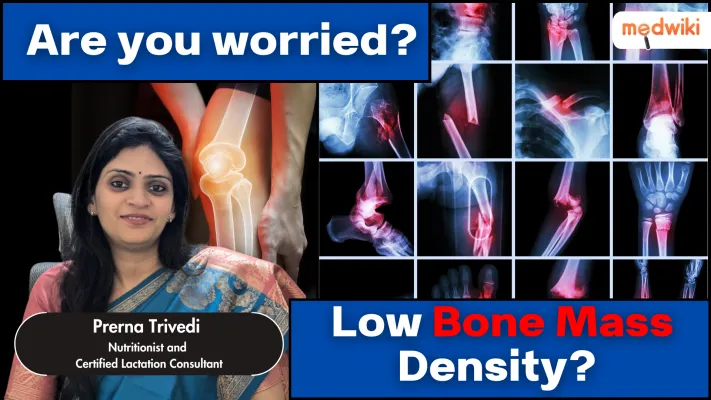
Genetic factors have a primary role in determining bone mass but our lifestyle factors like diet and physical activity are equally responsible.If I just say BONES… Which nutrient came to your mind first?It was Calcium, wasn't it? Yes, it is critically important for our bone health.Can you think of any other factor that can help us build a healthy bone and a strong skeleton?There are many other factors. Let's check out for more:Vitamin D levels: Vitamin D is crucial for good bone health because it aids in absorption and utilization of calcium.Get your Vitamin D tested.Physical activity: Is very important for bone health throughout life. It increases and preserves bone mass and reduces the risk of falling.Start physical activity today. Find a link of videos on physical activity in the description below.A healthy body weight: Maintaining a healthy body weight is important for bone health throughout life. If underweight, there is a risk of fractures and bone loss.Eat healthy and maintain your weight within BMI range.Reproductive issues: Though pregnancy and lactation generally do not harm the skeleton of healthy adult women. Amenorrhea (cessation of menstrual periods) before menopause is a very serious threat to bone health.Meet your healthcare provider as soon as you face this issue.Some medical conditions and medicines: These can affect bone health through various mechanisms.Ask your health care professionals if these conditions might affect your bone density and you need further assessment of bone health.Smoking and Alcohol: Reduces bone mass and increases risk of fractures.Say No to Smoking and Alcohol.Remember, a well balanced diet and physical activity are the key with a special focus on calcium and Vitamin D. Be aware, be conscious and be healthy.Source:- https://www.ncbi.nlm.nih.gov/books/NBK45503/
1:15
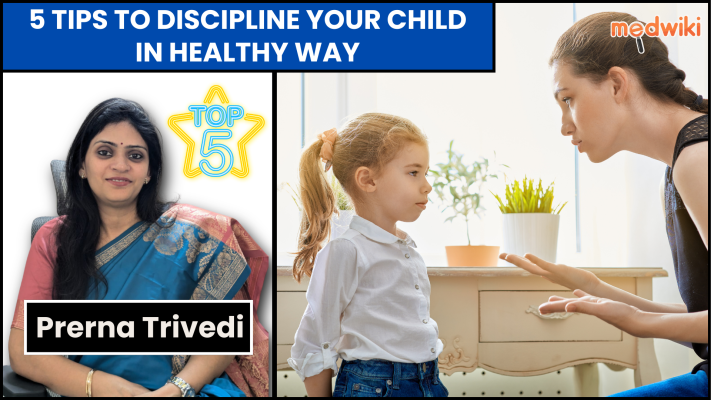
Parenting has really become a challenge, and today parents do not want to shout at their kids or hit them.Are they doing the right thing?Yes, because it has been proved that “Shouting” and “Physical Violence” never helps.But we as parents are so stressed and annoyed at certain times that we tend to shout or even hit them. We even tag them saying “A bad boy” or “A bad girl”. But remember “There is never a Bad Child, It is just their Bad Behaviour” which we need to discipline before it is too late.Does this happen to you? Do you also feel guilty after this episode?Don’t worry we will help you with 5 easy tips to discipline them:Have a 1 on 1 time: It is extremely important to have special few minutes with your child to develop a healthy relationship. This could be just 10 or 20 minutes but during this time you must turn off TV or mobile and just focus on your child.Praise what they are doing good: Parents usually pick up bad behavior and comment on those, just for correcting them. But, when we praise our kids, they feel loved and special. This helps encourage good behavior.Keep your points straight: Rather than saying “No, don't do this” start saying “Do that”. So maybe you want them to clean up after they play. Do not say “Do not leave your toys here” instead say “Please keep your toys in the box after you play”. With this, your child has a clear idea about your expectations and there is no confusion.Distract with a positive activity: Moments when your child is very cranky or is getting stubborn, it is always good to distract them with some positive activity like introducing a game, changing the topic or even going for a walk”. Timely distraction is very crucial, so intervene before the child is too rigid with the behavior. Choose the best way that helps your child get distracted.Explain the consequences of bad behavior: Rather than getting annoyed just let them know the consequences if they continue with the bad behavior. Maybe, if you want them to finish their homework before they go to play. Just say “You are not going out to play without finishing your homework”. This is a small warning for them to change their behavior.Now, also remember to praise your child if they finish their homework before going out to play. This creates positive feedback.SO, the Matra of Disciplining your child is “CONSISTENCY”. It is a key factor in positive parenting.source: https://www.unicef.org/parenting/child-care/how-discipline-your-child-smart-and-healthy-way#:~:text=Use calm consequences&text=Give your child a chance,will end their play time.

1:15
Have you ever seen something that isn’t really there, or heard a sound without knowing who is speaking? These things feel so real that their effect stays in your brain for many days. Have you ever wondered why this happens and what it's called?Hallucination is a sense of feeling, seeing, smelling or hearing something that isn't real, or doesn't even exist.Hallucination can happen due to some altered chemical changes or disorders of brain.Hallucination has various causes including mental illness as the Major ones.Let's see what are those causes:Schizophrenia: more than 70% of patients suffering from schizophrenia tend to hallucinate about voices, touch or smell which isn't real.Parkinson's disease: People who are suffering from Parkinson are most likely to suffer from hallucinations.Alzheimer's disease: Patients suffering from advanced stage of Alzheimer's disease can have hallucinations sometimes.Brain tumor: Brain tumor cause different forms of hallucinations such as visual, smell or sounds on the basis of location of tumor in the brain.Epilepsy: people who have epilepsy, can also hallucinate on the basis of the type of seizures they get.source:https://www.nhs.uk/mental-health/feelings-symptoms-behaviours/feelings-and-symptoms/hallucinations-hearing-voices/ https://www.ncbi.nlm.nih.gov/pmc/articles/PMC2702442/
1:15
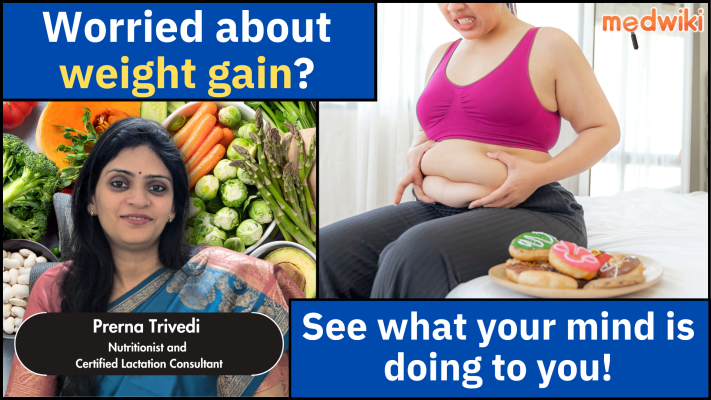
You might not be even overweight but you are still extremely worried about being obese. You have also decided to limit your diet. What do you think it could be?It might just not be just a lifestyle change BUT it could be serious symptoms of Anorexia Nervosa. Around 1% of young females are suffering from this serious problem.Who is at risk?80-90% of such cases are found in teenage girls (around 15 years of age). This condition leads to a great extent of weight loss, and these young girls soon require hospitalization. Unfortunately, Anorexia Nervosa has the highest mortality rate of any psychiatric disorder.What are the visible changes?Young girls often start excluding or reducing the foods that she normally eats. They could skip school lunches, family dinners or even deny specific things like sweets or snacks. She might plan her diet with no sugar and fat and involve into much more c than ever.6 Serious symptoms of Anorexia Nervosa:Absence of menstruation (Amenorrhea)DepressionFits of rageConcentration problemsSleeping issuesSocial withdrawalWhat can Anorexia Nervosa lead to?This illness is often accompanied by some serious diseases like:Obsessive Compulsive disorder (OCD)Substance use disordersAnxiety disordersAnorexia Nervosa takes an average of 5 to 6 years from diagnosis till recovery.As we touched upon Obsessive compulsive disorder (OCD), watch our next video to understand all about OCD.source: https://www.diva-portal.org/smash/get/diva2:559498/FULLTEXT02.pdf https://www.ncbi.nlm.nih.gov/pmc/articles/PMC1857759/

1:15
Eating disorders are associated with significant burden on a persons quality of life. Bullimia Nervosa is one such eating disorders.If you feel like just eating and eating for the entire day, you could be in a trap of Bullimia Nervosa.What is Bullimia Nervosa:Bulimia nervosa, simply called bulimia, is a serious eating disorder. The person gets trapped into the cycle of first binge eating and then purging out/ vomiting everything.Who is mostly at risk?It is mostly seen in Adolescent girls.What is a common episode seen?It is a three level episode:Level 1: A person tends to lose control over the serving size he/ she is eating and consumes a lot more than normal.Level 2: They purge out everything with a fear of weight gain.Level 3: They get involved in things like self induced vomiting, extreme physical activity and fasting fearing weight gain.How does it affect?Bullimia Nervosa is a psychiatric disorder that can lead to complications. such asSwelling in salivary glands and cheeksGERD: Gastroesophageal reflux diseaseBarrett's esophagus, which can lead to esophagus cancerCoughing, hoarse voice and sore throatIrritable bowel syndromeConstipationDental problemsDiabetesIt is often seen that people suffering from Bullimia Nervosa mostly recover well. Our first and foremost objective is: Stopping the cycle of binging and purging.source: https://www.ncbi.nlm.nih.gov/books/NBK562178/
1:15
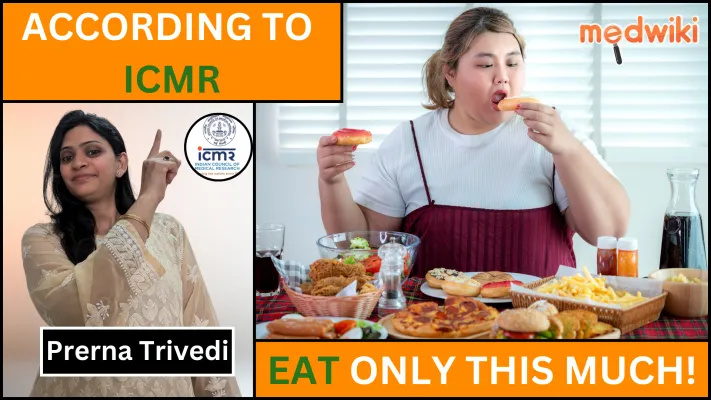
Recently ICMR has shared an easy to track method of daily diet using their “My Plate”. What is this ICMR Diet?Data reveals that 56.4% of the total disease burden in India is due to unhealthy diets. More or less, we all know that a healthy diet and physical activity are 2 components that can help reduce risks of coronary heart diseases, hypertension and prevent Diabetes to up to 80%.Indian Council of Medical Research (ICMR) summarizes “What all” and “How much” should one eat in the entire day with an easy to track method of “My Plate”.Let us go back and think about what we eat daily. Analyze your daily diet and understand is it really any one particular food group which gains most of the attention.Yes, even researches have proved that the Indian diet is completely focused on just “Refined Cereals”. Rather our diets should focus on micro-nutrient dense foods which include whole grains, pulses, beans, nuts, vegetables and fruits, etc.Good to go? I think a question is still coming to our mind - “How Much”?Let us learn this with a very simple “My Plate” method of ICMR’s daily diet recommendation:Vegetables, fruits, green leafy vegetables, roots and tubers: 500 gms in a day (accounting to 50% of your daily diet)Pulses, Eggs and Flesh foods: 85 gms in a dayNuts and seeds: 35 gms per dayFats and oils : 27 gms per dayCereals and Nutri Cereals: 250 gms per dayMilk: 300 ml per dayRemember, this is not just about one meal but what you should eat in ONE DAY.So, the real shift is needed in our eating habits. As the first step let us focus more on Fruits and Vegetables and cut down on cereals.What to Avoid:Ultra processed foods, junk foodsFoods high in fat, sugar and saltWhat to Restrict:Sugar intakeOil for cooking purposesIn between snackingFollow this healthy diet for a healthy adulthood. Also follow, like and subscribe to our channel for such crispy and healthy informations.source:https://main.icmr.nic.in/sites/default/files/upload_documents/DGI_07th_May_2024_fin.pdf

1:15
An inspiring journey of courage and resilience: Lieutenant Colonel Barsha Rai shares her path from battling asthma to conquering the Kargil War Memorial run and beyond.In this inspiring Independence Day special episode(Part 2), Dr. Beauty sits down with Lieutenant Colonel Barsha Rai, a true embodiment of strength and determination. Discover how Barsha Rai defied the odds to become a proud member of the Indian Armed Forces, driven by an unyielding passion and love for her country.Join us as she shares her remarkable journey—from overcoming asthma since the age of 2.5 and enduring challenges like sciatica and knee injuries, to planning and completing a gruelling 160km run to the Kargil War Memorial. Despite health challenges, Barsha's spirit remained unbreakable, finding solace and strength in yoga, a practice that she has now mastered and certified in. Get a glimpse into her personal life, including her deep bond with her 7 dogs, the unwavering support of her parents and husband, and the mental health strategies she employs to stay resilient in the face of adversity.Throughout the conversation, Lieutenant Colonel Barsha Rai reveals what motivates her to keep pushing forward, inspiring us all to pursue our passions, no matter the obstacles. Tune in for an unforgettable conversation that will leave you motivated, uplifted, and ready to face your own challenges with courage and determination. Thankyou for this lovely and meaningful conversation @barsharai4656 Don’t forget to like, share, and subscribe for more inspiring stories from Medwiki!

1:15
An inspiring journey of courage and resilience: Lieutenant Colonel Barsha Rai shares her path from battling asthma to conquering the Kargil War Memorial run and beyond.In this inspiring Independence Day special episode , Dr. Beauty sits down with Lieutenant Colonel Barsha Rai, a true embodiment of strength and determination. Discover how Barsha Rai defied the odds to become a proud member of the Indian Armed Forces, driven by an unyielding passion and love for her country. Join us as she shares her remarkable journey—from overcoming asthma since the age of 2.5 and enduring challenges like sciatica and knee injuries, to planning and completing a gruelling 160km run to the Kargil War Memorial. Despite health challenges, Barsha's spirit remained unbreakable, finding solace and strength in yoga, a practice that she has now mastered and certified in.Get a glimpse into her personal life, including her deep bond with her 7 dogs, the unwavering support of her parents and husband, and the mental health strategies she employs to stay resilient in the face of adversity. Throughout the conversation, Lieutenant Colonel Barsha Rai reveals what motivates her to keep pushing forward, inspiring us all to pursue our passions, no matter the obstacles. Tune in for an unforgettable conversation that will leave you motivated, uplifted, and ready to face your own challenges with courage and determination.
Shorts

Watermelon Benefits! Stay Hydrated and Healthy in Summer!

Mrs. Prerna Trivedi
Nutritionist

How Can Bael Fruit Keep You Cool And Healthy This Summer?

Drx. Salony Priya
MBA (Pharmaceutical Management)

Can brushing after meals cause damage?
Mrs. Prerna Trivedi
Nutritionist

6 Simple Ways to Get Rid of Bad Breath Naturally!
Mrs. Prerna Trivedi
Nutritionist

Know Us
@2026 Medwiki Pvt Ltd. All Rights Reserved