

1:15
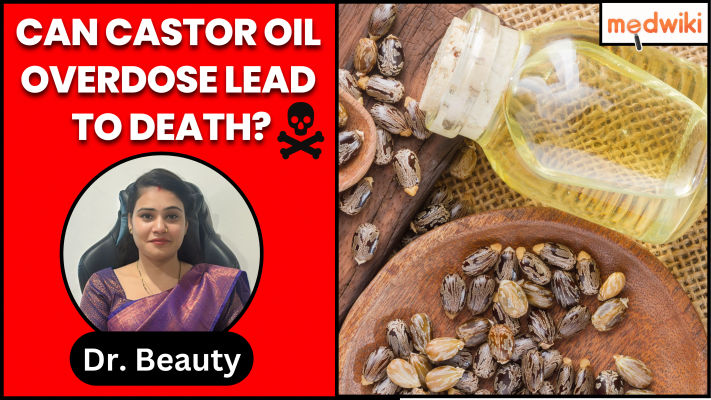
Have you ever used that thick-sticky oil for your hair that has been all the rage on the internet?Even if you haven’t, you might have used castor oil for respiratory issues,constipation or as a skin remedy.If your answer is still ‘no’, go check your hair care and skin care products, you can even find the list of constituents of your soap.Butdo you know, castor oil does have some potential side effects and can even be poisonous when consumed in excessive amounts or improperly?Suggested Read: How to use Castor Oil for health issuesLet’s dive into the details of the side effects of castor oil.1. Overdose Effects: Consuming around 60 to 90 ml of castor oil can lead to abdominal cramps, nausea, vomiting, and diarrhea. This is why it's important to follow dosage recommendations carefully.2. Skin Reactions: Applying castor oil to the skin might cause allergic reactions such as rashes or irritation in some individuals. A patch test can help identify if you’re sensitive to it before full application.3. Dehydration: Due to its laxative effect, excessive use of castor oil can result in diarrhea, which may lead to dehydration if not managed properly.4. Pregnancy Concerns: Pregnant women should avoid using castor oil as it can induce uterine contractions and potentially lead to preterm labor.5. Other Symptoms: Additional side effects might include chest pain, dizziness, fainting, throat tightness, and shortness of breath.If you’re considering using castor oil for any purpose, especially if you have underlying health conditions or are pregnant, it’s best to consult a healthcare professional to avoid any adverse effects.Suggested Read: Top Health Benefits of Castor Oil

1:15
Have you ever wondered why your mom or grandma always adds garlic to food or oil for massages when you have a cold or pain?The reason is that garlic can work wonders for your body, from boosting immunity to giving you glowing skin. It not only has a great taste but also offers numerous health benefits that can treat illnesses and help you live longer.Incredible Health Benefits of Eating Raw Garlic Daily:1. Heart HealthReduces bad cholesterol levels, lowering the risk of heart attacks and high blood pressure by 15-40%.Contains allicin, which helps relax blood vessels, making blood flow easier and reducing blood pressure.2. Cognitive HealthAllicin, an antioxidant in garlic, prevents cell damage and cognitive decline.Lowers the risk of Alzheimer's disease.3. Digestive HealthEating raw garlic kills harmful bacteria in the digestive system, preventing infections and worms.Reduces the growth of E. coli bacteria, which can cause urinary tract infections (UTIs).4. Joint Pain ReliefConsuming garlic cloves can reduce pain and inflammation caused by arthritis.Boosts immunity and prevents colds and coughs by stopping viruses from spreading.5. Weight Loss AidGarlic helps reduce the formation of fat-storing cells.Increases the rate at which the body burns fat.Garlic is more effective than any other health supplement or medication. It’s the ultimate combination of taste and health.Source:-1. Bayan, L., Koulivand, P. H., & Gorji, A. (2014). Garlic: a review of potential therapeutic effects. Avicenna journal of phytomedicine, 4(1), 1–14.https://www.ncbi.nlm.nih.gov/pmc/articles/PMC4103721/2. Ansary, J., Forbes-Hernández, T. Y., Gil, E., Cianciosi, D., Zhang, J., Elexpuru-Zabaleta, M., Simal-Gandara, J., Giampieri, F., & Battino, M. (2020). Potential Health Benefit of Garlic Based on Human Intervention Studies: A Brief Overview. Antioxidants (Basel, Switzerland), 9(7), 619. https://doi.org/10.3390/antiox90706193. https://www.ncbi.nlm.nih.gov/pmc/articles/PMC7402177/

1:15
What comes to your mind when you hear the word rain? Hot pakoras or samosas with tea? The rainy season is the favorite season of many people, theyenjoyplaying, swimming or getting wet in the rain. But have you ever thought that this clean and soothing rainwater can be fatal for you or your children?Accumulated rain water is the home of many deadly viruses, bacteria and parasites.What is this amoeba and what brain infection does it cause?In Kerala, after a 5-year-old girl on May 21, and a 13-year-old girl on June 25, a 14-year-old boy died last week. And the reason for all this is a very rare brain infection "amoebic meningoencephalitis" which is caused by an amoeba called Naegleria fowleri. It is also known as “brain eating amoeba”.Naegleria fowleri grows in warm water resources such as ponds, rivers, hot springs or swimming pools. Medical experts claimed that this infection occurs when Naegleria fowleri enters your body through your nose from any infected water resources and then reaches the brain through the olfactory nerves in your nose and destroys brain tissues.But this infection is not caused by drinking contaminated water nor does it spread from one person to another.Suggested Read: Brain Eating Amoeba: Beware!What are the symptoms of this brain infection?FeverHeadacheVomitingSeizuresNeck stiffnessHallucinations.Suggested Read: 14 Years Old Boy in Kerala Dies Due To Nipah Virus! What is Nipah Virus?How can we avoid this dangerous disease?There is currently no cure for this infection. Doctors manage this rare infection by mixing some medicines like amphotericin B, azithromycin, fluconazole, rifampin, miltefosine, and dexamethasone.Kerala Chief Minister Pinarayi Vijayan also held a meeting on this matter and advised to follow these guidelines of the Centers for Disease Control and Prevention (CDC):1. Do not go to the river, pond or any swimming pool during summer, because this amoeba grows in hot water.2. Whenever you go inside the water, close your nose with your hand or use a nose clip.3. Whenever you are swimming, try to keep your head above water.4. Do not disturb the sediments under water, because this amoeba is mostly found in the sediments of ponds, lakes or rivers.5. And if you have sinusitis, heat the water for 1 minute and let it cool, then rinse your sinuses.So stay aware, follow these guidelines and protect yourself from the harmful amoeba.Suggested Read: Deadly Zika Virus!

1:15
Congratulations, students, on getting your student visa granted and starting a life-changing journey from your home country to abroad.From a Mumma's boy and daddy's little girl to an independent adult with a career goal, you're all set to go!Every year, from August to September, about 750,000 students from India travel to the USA, Canada, Australia, the UK, and many other countries for higher education. From packing clothes, utensils, shoes, laptops, and all documents to the food items secretly placed in your bag by your mom, one main thing often gets overlooked - a customized first aid kit.Just imagine you have landed at your destination, and the food or weather has affected you, causing cold, fever, or diarrhea. Where would you go looking for medicines? But you and your family will have no worries if you have that first aid kit with you.Now, you might be thinking whether it is allowed to carry your first aid kit at the airport or not. Carrying your daily medicines and a first aid kit is allowed at airports.So, let's talk about the 30 medicines that you must carry in your first aid kit while traveling:Sanitizer or Antibacterial Wipes: You don't know when or where you might catch an infection or a fatal disease like COVID-19, so a hand sanitizer is a must-carry item and should be used before and after touching a wound, after a handshake, or before eating to kill germs.Recommendation: Dettol Hand SanitizerInstant Hot Pack and Cold Pack: Hot packs are important to get relief from excessive cold, and a cold pack can help relieve burns or bruises.Recommendation: Flamingo Cool Pack | Heating Pad Regular 1sThermometer: A thermometer is a must to check fever temperature.Recommendation: Hicks Digital ThermometerBandages: Different-sized bandages and adhesive bandages must be kept in the first aid kit.Recommendation: Band AidAntiseptic Liquid: Antiseptics like Dettol or Betadine solution can be carried to clean any cuts or wounds.Recommendation: Dettol Antiseptic 125ml LiquidAntibiotic Cream or Ointment: For local application for cuts, boils, and skin infections. It can cause an allergic reaction, so a thin layer is recommended.Suggested medicine: Mupicip 2% OintmentPain Relief Ointment: Traveling, long sitting, or lifting heavy luggage can cause muscle aches or back pain. A pain relief cream for local application can be helpful.Suggested medicine: Omnigel OintmentOral Rehydration Solution: Sometimes, food from outside can cause indigestion, loose motion, and vomiting, leading to dehydration and loss of essential electrolytes like sodium, potassium, and glucose from the body. An ORS is helpful in treating dehydration due to loose motion or vomiting.Recommendation: Electral Powder | Sodium Chloride IP 2.60 gms, Potassium Chloride IP 1.50 gms, Sodium Citrate IP 2.90 gms, Dextrose Anhydrous IP.Fever and Pain Medicine: Weather changes and tiredness can lead to fever and headaches associated with body pain. Even due to some infections, you may get a fever. In that case, medicine for treating aches/pains, fever, and headaches is required.Suggested medicine: Tab Calpol or Crocin | Paracetamol 650mgPrecautions: Remember not to take this medicine if you have any liver disorders.Pain and Anti-inflammatory Medicine: These medicines can relieve pain and any swelling in the body caused by an injury.Suggested medicine: Tab Combiflam | Ibuprofen (400mg) + Paracetamol (325mg)Precautions: Remember not to take this medicine if you have any kidney-related problems or are already taking any other medicine that contains the same salt composition.Muscle Relaxants: Sometimes, due to weakness caused by a lack of nutrients in the body, muscle sprains can occur. They are used for muscle pull sprains.Suggested medicine: Tab Flexinol | Flupenthixol (0.5mg) or Cap Ace Proxyvon | Aceclofenac (100mg) + Paracetamol (325mg)Gastric Medicine: It can relieve acute gastritis or reduce gas formation caused by skipping breakfast or lunch due to some urgent work.Suggested medicine: Tab Rzole | Rabeprazole (20mg)Chewable Digestive Tablets: These can relieve indigestion and acidity. After having your meal, if your food travels back to your throat or you feel bloated or gassy, these chewable digestive tablets can provide relief.Suggested medicine: Tab Digene chewable | Aluminum Hydroxide (300mg) + Magnesium Aluminium Silicate Hydrate (50mg) + Magnesium Hydroxide (25mg) + Simethicone (25mg)Anti-Allergic Medicine: It is used for allergies, itching, cold, sneezing, insect bites, and asthma.Suggested medicine: Tab Alerid | Cetirizine (10mg)Medicine for Vomiting: These medicines are used for nausea & vomiting. For motion sickness, it can be taken ½ hour prior to the start of the journey.Suggested medicine: Tab Domstal | Domperidone (10mg)Anti-diarrheal Medicine: These are used for loose motions to reduce the frequency of going to the toilet.Suggested medicine: Cap Imodium | Loperamide (2mg)Medicine for Severe Diarrhea: They can be used for severe diarrhea only under medical supervision. They can also be used for urinary tract infections.Suggested medicine: Tab Cifran CT | Ciprofloxacin (500mg) + Tinidazole (600mg)Multivitamins and Probiotics: Multivitamins for general body weakness and probiotics for loose motion or diarrhea.Suggested medicine: Nutrolin B capsules (lactobacillus spores) | Multivitamin + lactobacillus sporesEye Drops: It is used for the treatment of any bacterial eye or ear infection until you get to see an ophthalmologist. It can cause eye irritation and blurred vision for a while after applying, so do not drive while using this drop. Also, if you wear contact lenses, don’t use them until your infection is over.Suggested medicine: Ciplox eye drops | Ciprofloxacin (0.3% w/v)Nasal Drops: It can be used for nose blocks caused by sinusitis or other allergies that have continued for three days.Suggested medicine: Otrivin Oxy fast Relief Adult Nasal Spray | Oxymetazoline (0.05% w/v)Antibiotics: Antibiotics are used to treat infections of the lungs, ear, throat, sinuses, bones, joints, and urinary tract infections. They don’t work for viral infections. These medicines should only be taken on the advice of a physician, and completing the dose is required, or else you can get the infection again.Suggested medicine: Tab Ceftum | Cefuroxime (250mg) or Tab Augmentin | Amoxicillin (500mg) + Clavulanic Acid (125mg)Abdominal Pain Medicine: They can be used for stomach pain or period cramps that occur during menstruation.Suggested medicine: Tab Cyclopam | Dicyclomine (20mg) + Paracetamol (500mg)Sinusitis Medicine: It is used for colds, sinusitis, and other allergic infections with headaches. It can cause drowsiness.Suggested medicine: Tab Sinarest | Chlorpheniramine Maleate (2mg) + Paracetamol (500mg) + Phenylephrine (10mg)Medicine for Motion Sickness: Prevents and treats nausea and vomiting associated with motion sickness.Suggested medicine: Tab Stugeron | Cinnarizine (25mg)Pain Relief for Joint Ache: Effective in relievingJoint Ache or pain of any sortSuggested medicine: Tab Meftal P | Mefenamic Acid (500mg)Pain Relief for Stomach Cramps:For Stomach Ache or Cramps , dysmenorrhoea.Suggested medicine: Tab Meftal Spas | Dicyclomine (20mg) + Mefenamic Acid (500mg)Lozenges for Sore Throat: Provides relief from throat irritation and cough.Suggested medicine: Alex 5mg Lozenges | Ambroxol Hydrochloride (5mg)Antibiotic for Respiratory Infections: Treats respiratory tract infections andfor Amoebic intestine ( Mucus with cramps)Suggested medicine: Tab O2H | Ofloxacin (200mg) + Ornidazole (500mg)Antibiotic for Severe Infections: Treats severe bacterial infections includingbacterial Intestine ( blood and no cramps)Suggested medicine: Tab Floxip | Ciprofloxacin (500mg)Natural Laxative: For relieving constipation , to be taken at night Suggested medicine: Powder Softovac | Natural fiber blendPrescription Medicine: Any medicine prescribed by your doctor for your medical condition.How to Safely Use Your First Aid KitAfter packing all these medicines, it's essential to know how to use them wisely. Follow these points:•Take medicines only after consulting a doctor and avoid self-medication.• Discard any expired medicines.• Always keep medicines with their labels to identify their uses.• Carry the prescription for your medicines.Now that you're all set with your packing, you can travel with peace of mind and handle any pain, cuts, or bruises during your journey. Safe travels and best wishes for your new adventure

1:15
Every time you are hungry, watching a movie, going on a trek, or feeling cold, the first thing that comes to your mind is Maggi. It is super tasty and can be made in 2 minutes, making it the perfect option to eat every time without even considering the side effects.If you are also a Maggie lover and eat Maggi almost daily, you are at the right place.Still have questions about Maggie? Gettrustworthy answers from verified sources onAsk Medwiki.Read till the end to know the potential harm that a Maggie can do to your health:1. When you eat a lot of maggi, its high citric acid content causes antioxidant activity in the body leading to acidity, bloating, and gas.2. Eating maggi every day can lead to obesity and increase the risk of heart disease, because it is high in trans fat, the most unhealthy form of fats, which is hard to digest and it also increases the level of bad cholesterol in the body.3. Maggi contains high amounts of sodium in the form of preservatives, which account for 46% of the daily required value. It can lead to high blood pressure and hypernatremia, a condition when sodium levels are high in the body.4. Maggi is high in Mono Sodium Glutamate(MSG), commonly known as ajinomoto. It is a taste enhancer that keeps you craving to eat maggi again and again and makes you unhealthy.5. Maggi has no nutritional value. It is made of maida or refined flour which contains no fibers and is high in trans fats that can't be easily digested by the body.Source:-1. Sharma, B. P. (2015). Maggi Muddle and Food Safety: Issues are much Bigger. PACIFIC BUSINESS REVIEW INTERNATIONAL, 8(1).https://www.researchgate.net/publication/301887068_Maggi_Muddle_and_Food_Safety_Issues_are_much_Bigger2. Law, C., & Cornelsen, L. (2022). Persistent consumer response to a nationwide food safety recall in urban India. Q open, 2(2), qoac025. https://doi.org/10.1093/qopen/qoac025

1:15
Honey is found in more than 300 varieties with different taste, colour and odor. Honey is full of essential nutrients like proteins, vitamins, minerals and antioxidants. Apart from this, it also has other amazing health benefits.Such as:1. It has zero fat and a little amount of carbs, vitamins, minerals and calories, that makes it a healthier option to sugar.2. It has high amount of antioxidants such as flavonoids, and phenolic acids, that helps in preventing ageing, diabetes and heart diseases.3. Benefit is that, it has antibacterial and anti-inflammatory properties that makes it beneficial in healing wonds like diabetic foot, ulcers and burns.4. Research suggests that honey has better soothing effects than other cough syrups. It helps suppress the cough and increases sleep quality in both kids and adults.But, honey shouldn't be given to children of age under 1 year, as it can cause botulism.5. It helps lower the blood pressure by decreasing the bad cholesterol levels and increasing the good cholesterol levels in the body.Still have questions about Honey ? Gettrustworthy answers from verified sources onAsk Medwiki.Source:-1. Ajibola A. (2015). Novel Insights into the Health Importance of Natural Honey. The Malaysian journal of medical sciences : MJMS, 22(5), 7–22.https://www.ncbi.nlm.nih.gov/pmc/articles/PMC5295738/2. Samarghandian, S., Farkhondeh, T., & Samini, F. (2017). Honey and Health: A Review of Recent Clinical Research. Pharmacognosy research, 9(2), 121–127. https://doi.org/10.4103/0974-8490.204647

1:15
Famous celebrities of India like Virat Kohli, Shruti Hasan, Malaika Arora, and Sara Ali Khan are often seen drinking black water. Black water has gained a huge popularity on social media as it is found to be a super healthy drink.But, what really is black water?well, Black water is an alkaline water, high in fulvic acid, which gives it a black color. Fulvic acid is rich in calcium, potassium and magnesium making it a healthy drink.Why do celebrities drink black water?Celebrities like to sip on black water due to many reasons:1. It increases the amount of good bacteria in the stomach which aids in digestion and metabolism.2. It's alkaline nature keeps the blood less viscous after exercise and prevent dehydration.3. The fulvic acid helps in detoxification, because it binds easily to the toxins in the body and eliminates them through urine.It also prevents diabetes as it keeps the blood sugar in control, by reducing cellular glucose.So, drinking black water is way more beneficial to health and a good alternative to sugary drinks.Source:-1. Magro, M., Corain, L., Ferro, S., Baratella, D., Bonaiuto, E., Terzo, M., Corraducci, V., Salmaso, L., & Vianello, F. (2016). Alkaline Water and Longevity: A Murine Study. Evidence-based complementary and alternative medicine : eCAM, 2016, 3084126. https://doi.org/10.1155/2016/30841262. Chan, Y. M., Shariff, Z. M., Chin, Y. S., Ghazali, S. S., Lee, P. Y., & Chan, K. S. (2022). Associations of alkaline water with metabolic risks, sleep quality, muscle strength: A cross-sectional study among postmenopausal women. PloS one, 17(10), e0275640. https://doi.org/10.1371/journal.pone.0275640

1:15
The first monsoon is a great relief after hot summers and a great gift for farmers. But, the heavy rain causes a lot of destruction and water logging and thus becoming a home for many deadly diseases.When the rain water doesn't get a proper drainage, they get pooled and are known as standing water, stagnant water, water logging or more, which can be dangerous to your health as they increase the risk of various infectious diseases.Let's talk about the health effects and diseases caused by water logging:1.Parasitic diseases:Water logged areas provide a favorable environment for deadly viruses and parasites to grow, which can causeDengue Fever: Dengue is a viral infection caused by mosquitos that leads to severe flu-like symptoms, including high fever, muscle and joint pains, headache and skin rashes.Malaria: Malaria is a very common mosquito-borne disease which is caused by a parasite and transmitted through the bites of infected Anopheles mosquitoes. Symptoms of malaria include chills, fever, and flu-like symptoms.Chikungunya: Chikungunya results in a sudden rise in body temperature, severe joint pain, headache and rash. It is transmitted through infected mosquitoes.Suggested Read: From Mosquitoes To Humans: How Dengue Fever Spreads2. Infection in eyes:Water logging can lead to eye infections when this contaminated water comes in contact with the eyes which can cause discomfort to your eyes due to infections likeConjunctivitis: Conjunctivitis, also known as Pink Eye, is aneye condition where the conjunctiva, the membrane covering the white part of the eye and eyelids, becomes inflamed. This membrane has small blood vessels that become enlarged when the conjunctiva becomes irritated, leading to a reddish appearance of the eye.Keratitis:The inflammation in the cornea (the clear front layer of your eyes) is termed as keratitis. It includes symptoms likeredness, pain, tearing, blurred vision and light sensitivity.Suggested Read: Eye Flu: The Pink Eye4. Skin infection:When your skin gets into contact with logged water, the bacteria and fungi can transfer onto your skin causing fungal infections such asEczema:Eczema isa condition thatweakens the barrier function of your skin which is responsible for helping your skin retain moisture and protecting your body and thuscauses your skin to become dry, itchy and bumpy.Dermatitis:Dermatitis is a common skin condition that leads to swelling and irritation of the skin and often involves itchy, dry skin or a rash.Suggested Read: What's Causing Your Skin Rash5. Respiratory infections:The spores of bacteria, virus or parasites from the logged water can get into your airways by getting mixed along with the air you breathe. These mold spores cause irritation in the airways and cause respiratory issues like asthma, and allergic rhinitis.Asthma: Asthma is a chronic respiratory condition in which your airways get narrowed and swollen and are further blocked by excess mucus production thus causing difficulty in breathing and wheezing.Allergic rhinitis:Allergic rhinitis, also known as hay fever, is an allergic condition that causes sneezing, congestion in nose and watery eyes.Suggested Read: The Healing Power of Yoga for Asthma Patients6. Gastrointestinal infections:Water logging can cause gastrointestinal infections as it creates a suitable environment for bacteria, viruses and parasites to grow and reproduce easily. And when you drink this contaminated water, it can cause various stomach infections.So, in order to prevent such health hazards it is important to take precautions towards proper drainage of water, and sanitation.Suggested Read: 7 Home Remedies to Prevent Diarhhea
Shorts

Watermelon Benefits! Stay Hydrated and Healthy in Summer!

Mrs. Prerna Trivedi
Nutritionist

How Can Bael Fruit Keep You Cool And Healthy This Summer?

Drx. Salony Priya
MBA (Pharmaceutical Management)

Can brushing after meals cause damage?
Mrs. Prerna Trivedi
Nutritionist

6 Simple Ways to Get Rid of Bad Breath Naturally!
Mrs. Prerna Trivedi
Nutritionist

Know Us
@2026 Medwiki Pvt Ltd. All Rights Reserved